With any documentary, it’s important to understand why this is being made now as well as voicing my reasoning as to why the topic is so important to me. This knowledge allows the documentary to have more meaning and allow us as storytellers to dig deeper and create a documentary with multiple layers of emotion and story.
Why Now?
British Motorsport is in it’s prime with Lewis Hamilton set to win a 5th F1 World Championship and younger British drivers are winning many of the lower categories. The interest in motorsport in the UK is very high, with 2.33 Million People watching this year Spanish Grand Prix (F1 Broadcasting)
As there is such a large audience for motorsport currently, I feel that this documentary will help the general public understand what being a motor racing driver really is, even if our documentary is focusing on a motorsport on a smaller scale to F1.
This documentary aims to show the issues they may have faced on their journey in motorsport and what kept them motivated. This will enable the general viewer to understand the sacrifices and dreams of racing drivers and what makes them risk their lives for their job. Our aim is to produce a documentary that is for the masses, focusing on "what it is like to achieve your dreams", we do not want to produce a How-To Guide for motorsport as that is not for a wide audience and does not interest me.
It is a perfect time to illustrate this topic as many young motorsport fans in Britain will be intrigued by the success of our top athletes, this documentary will give perspective on what the journey is really like, if on a smaller scale. The idea of following your dreams is a subject that is always relevant as everyone always strives to improve and try new things in life. This documentary will be the catalyst of viewers questioning their dreams and what they need to do to achieve them.
F1 Broadcasting Reference: https://f1broadcasting.co/2018/05/14/channel-4s-f1-highlights-coverage-draws-record-audience/
The Motive Behind This Project
I am fascinated by people who risk everything to achieve their dreams. When you get to understand about someone who loves something so much, they dedicate their life to it, it makes for a very special story. However, most people are not blessed with the money or resources to focus solely on their dream, as they may have a job or a family. I want to achieve one of my dreams and I saw the creation of this documentary as a good time to give it a go.
Ever since I can remember I have been a fan of motorsport. When I was 5 or 6 years old my father would watch motorsport on the TV and I would watch it with him. I started watching more and more and in 2004 my Father decided we should go to our local racing track, Brands Hatch, to watch a race. I still remember to this day, driving into the circuit and being deafened by the noise of Formula 3 cars. It somewhat shocked me as a young kid at how loud these cars were, but also made me love the sport. I distinctly remember some of the cars I watched that day, the Formula 3 cars which are not that much slower than F1 Cars. I also saw Porsche's, TVR's, Moslers, basically some of the fastest cars in the world. From that moment onwards I knew this was one of my passions.
In 2008, after Lewis Hamilton won his first F1 championship, I went with my sister and parents to our local go-kart track for the first time. From that moment onwards I was hooked. I have set up on own championship with friends and family so we can make our karting sessions a little more competitive. 2008 was the first time I had ever been on a go-kart track, most professional racing drivers started racing seriously at the age of 4 or 5. I knew I could never have a career in motorsport because I had no money and I started late. However, this never stopped me from wanting to give it a go. This will be explored heavily in my documentary, drawing on the emotional side of not being able to follow my dream as a child.
I tried for a number of years to try and talk to companies about sponsoring me to race go-karts but it never happened. For a few years after that, I did start to think that I would never have the chance to live my dream. I continued to race in the championship I set up between friends and family but the dream was always to race at a slightly higher level. I started a YouTube channel in 2011 which revolved around motorsport which enabled me to have many great opportunities around motorsport. It was a different route to what I had wanted but this got me closer to the sport than I had ever dreamt.
I was lucky enough to get even closer to the sport I loved throughout 2017. I got to visit some large motor races as press which enabled me to speak to professional drivers and get much closer to the action and drama. I absolutely loved it. The passion for motorsport had taken a hit after I realised I would not be able to live the life of a racing driver that any child dreams of. But when you grow up you realise some things are just meant to be. After going as media to multiple events, it got me thinking, could I drive in a motor race, if I put the money aside? These thoughts led to the creation of this documentary.
Money, A License and Skill are things you need to even start racing on a low level, but as soon as I realised it could be a possibility, I wanted to make it happen. I was struggling to come up with an idea for the 3rd-year major project, but then I thought, could I not just film this? Of course all of the technical details of how/where/when needed to be sorted out before I could film it, but it looked like it would work.
You can now see why I have a passion for motorsport. You can see why it is a dream of mine to drive in a motor race. Now the story is coming together and how I want the documentary to look is being finalised, this is actually happening. It actually gives me goosebumps writing this. Recalling how this all started does seem a little crazy, but the journey I have been on has enabled this to be a possibility, and I want to make the most of it. The team and co-driver are sorted, the budget is nearly complete and we have a good idea of where we may be filming. I am excited and nervous at the same time. I know I have a great team around me which will allow me to focus on the race when it happens. Now, just the nervous countdown.
Friday, 19 October 2018

Monday, 15 October 2018
Pre Production - Location Scout - Sunday 14th at Donnington Park
Yesterday I visited Donnington Park to do a location scout of the track which seems like it will hold the event which concludes our documentary, the motor race. Timetables for the 2019 season are yet to be confirmed, but from researching into the previous year's championships, they have all started at this track. While at the location, I needed to make sure I looked out for certain things. My findings can be seen below.

Space
 I visited while it was raining heavily so I was not able to walk the whole of the track, but I was able to gain vital knowledge of the surroundings by observing the area. I was attending this event as general public, not media, meaning that I was not able to assess how the filming locations would be trackside. As mentioned in another blog posts, filming positions at the side of the track are often narrow meaning it will be tough to set up a tripod. I hope to assess this situation again in January when we recce the location again, hopefully with access to go in the media areas.
Transport Links
Near Donnington Park, there is an International Airport (East Midlands), which was a potential travel system, but due to flights from down south, it isn't financially viable to fly. When I went to location Recce I drove and it took 3hr30mins, but for George and Cailan it should take 1 hour less as they live closer to the location. We should be able to fit all crew and equipment across two cars and money for fuel has been allocated in the budget.
Parking was right by the track and only around 10 minutes away from the pits. However, as I will be racing, you are allowed cars inside the circuit boundaries and we should be able to park parallel to the pit garage. This will help us as we will not need to carry the kit from the car to the paddock. As for links around the circuit, from what I could see you can walk all around the track. From previous experience, there may be media shuttles between races. As long there is strong leadership from Cailan about where people will be filming, getting the correct shot will be no issue. A plan will be made in early 2019 after another recce about where each camera will be placed.

 I visited while it was raining heavily so I was not able to walk the whole of the track, but I was able to gain vital knowledge of the surroundings by observing the area. I was attending this event as general public, not media, meaning that I was not able to assess how the filming locations would be trackside. As mentioned in another blog posts, filming positions at the side of the track are often narrow meaning it will be tough to set up a tripod. I hope to assess this situation again in January when we recce the location again, hopefully with access to go in the media areas.
Space for the general public is great. As shown in the pictures there is lots of space and especially on a smaller race meeting like I attended, and one similar in size to one I will be racing in, there is only a small number of people meaning we could film where we wanted. From my experience, we should obtain media access but we know there is a possibility that we will not. Therefore, I wanted to see what the shooting conditions for general viewers were. I did some test shooting while I was there. I did notice that around the first half of the lap it was especially hard to get close enough to the track to get the cinematic shots that were after. Saying this, there were numerous locations we could film from, which I have indicated on this map that I took with myself when looking at the location. (The X marks the location and what you can see from that location. The arrows are areas I did not visit but it seemed people were observing from these locations and could be good for filming)

 I also looked in the pit garages to see how big they were and they were larger than expected. I had only ever visited ones at Brands Hatch before and they are much smaller. This enables us to have more creative freedom with filming in the garages. The view from the garages was also good, but when the race is live we will be unable to walk down the pitlane as it is a very high-risk area. In general, the circuit has a lot of space for filming and I could not see any issue from the general admission viewing areas. When we recce again with the trackside access we will see what the restrictions are. I will be in contact with George about booking this location for a recce and obtaining media accreditation.
What to do reference: https://elementtwentysix.com/6-things-look-location-recce/

 I also looked in the pit garages to see how big they were and they were larger than expected. I had only ever visited ones at Brands Hatch before and they are much smaller. This enables us to have more creative freedom with filming in the garages. The view from the garages was also good, but when the race is live we will be unable to walk down the pitlane as it is a very high-risk area. In general, the circuit has a lot of space for filming and I could not see any issue from the general admission viewing areas. When we recce again with the trackside access we will see what the restrictions are. I will be in contact with George about booking this location for a recce and obtaining media accreditation.
Power Sources
While looking around the location, I kept an eye out for what power sources were available at the track. These will be vital on the shoot day as we will need to charge the cameras at some point during the day. While in the pit garages there seemed to be a couple of plug sockets. We should bring an extension lead to make sure that all of our cameras can be charged. This will also be right next to the car so the cameras will be exactly where we need them. I also noticed a few power outlets in the cafe but it would be too much of a risk to hope one is available on the shoot day.
We may also decide to buy additional camera batteries just for this event, but this may not be cost effective as we could easily end up spending £150 on batteries. We know our budget is already quite high so we need to make sure it stays sustainable. This will be a discussion we take forward into 2019 and decide if the cost is worth it.
Facilities
I kept a special lookout for facilities such as toilets, food areas and places to rest when at this venue as they will be important as we will be there all day. I was surprised at how up-to-date this track was and the facilities were much better than expected.
Toilets are located at a number of points around the track which will enable any crew member, no matter where they are, to have access to a toilet. These will be clearly located on a map we will use for the crew so they know where they are so that we have no problems with not understanding where the nearest facilities are.
Areas for food are located at the main entrance. Depending on when our race falls in the day, we may ask the crew to bring food with them at our cost or choose to use the lunch break as an opportunity to meet up and discuss final plans before the race. We must be wary that to travel to certain locations around the track could take up to an hour to walk to. Food was served throughout the day, but as a team, we know that it is best that each crew member takes enough food for the day just in case the food hall is inaccessible because of the timing of the race.
Areas to sit down and rest were located around the track, much like the toilets. There are benches to sit and grandstands as well. We hope these will only be needed in a situation where something has happened on the track and suspended the racing. Otherwise, all crew should be focusing on capturing the shots for the documentary. However, it is important to know these rest areas as the team may decide to meet up and discuss something in the middle of the day. These areas being clearly located on the map will then be very important in allowing all crew members to know where everyone is.
Hazards
It is important to observe the hazards with any location to minimise the risk of injury while filming. I visited on a very rainy day and all the areas with tarmac surface where fine and not slippy underfoot. However, there is a large area of grass that will have to be walked upon by certain crew members during the shoot day. That grassy area was susceptible to being water-logged and slippery. If the day is rainy or the area had seen rain over the previous days, caution will be needed when crossing the grassy areas.
Other risks come from the cars themselves. The camera crew who will be directed by George on the day will need to be diligent when moving and always keep an eye on the race track. Like anything in life, accidents can happen and if the crew member is keeping an eye on the track it will remove them from any risk that may present itself. This rule goes if you are trackside or just a general spectator at motorsport events. As I have experience with motorsport and being trackside as photographer/videographer, I will be able to show the crew how I operate as well as knowing where is safe and what places could be at potential risk. As long as the crew member thinks before they act, motorsport should not pose a threat. It is unplanned and actions with no care and attention which can cause issues. I will make sure, along with George and Cailan, that the rest of the crew know this and works accordingly.
Overall the biggest issue with location would be the distance. We would have to travel a long way, but we have put funds aside in the budget to make sure that will not be an issue. The facilities and track itself give us a lot of opportunities to capture some quality shots. We will see if this is the location used for the event by the end of December.
What to do reference: https://elementtwentysix.com/6-things-look-location-recce/
Wednesday, 10 October 2018
Pre Production - MAJOR PROJECT UNIT ROLES
This Blog post will show what the roles of the Major production until will be when we start in January. I am working on the major project and Cailan and George are working on hypothetical projects in pre-production. This blog will clearly identify which person will be responsible for what when we come to start the unit in January. I have liaised with Cailan and George throughout the unit so far and will continue to until we group together in early January. We also have a number of test shoots planned that we will do as a group.
- Cailan Cook will join me in January as the Director of Photography. As DOP he will be in charge of the documentaries visuals. He will start by adapting my script into storyboards which will help him visualise what I am writing. This will be of massive help when it comes to filming as we will use these storyboards to connect the story to visuals. Making sure we are all on the same wavelength will enable a consistent film throughout. He will follow my guidelines for how I want each scene to be shot and will decide what equipment is required to enable the scene to be captured in the best way possible. We will have multiple camera operators on some shoot days, meaning Cailan will be required to delegate who does what. We will have a variety of camera, with different qualities, some which better in low light and others that will create a better depth of field. It will be up to Cailan to ensure that the cameras are placed accordingly around the track as to ensure we get the shots decided in the script and storyboards. Cailan will also be helping direct when I am in front of the camera. It will be his job to shout action/stop and decide if something needs to be reshot. This means he will have to know the shots inside out and be able to offer opinions on how well a scene is going. He will work closely with George in making sure that the cameras are at the locations on time and also understanding what other equipment may be needed on specific days of the shoot. Cailan will also have a bit part in setting up equipment and lighting so that it looks the storyboards and scripts that have been created. A clear communication line between all of us will help make sure there are no issues with creating this project. Once the filming is complete, Cailan will need to transcribe the clips which I will use as the scriptwriter to edit my script.

- George Nicholls will also join me in January becoming the Producer and Editor. As a producer, George will be able to offer an impartial perspective on the script and general layout of the documentary. He will oversee the production and decide which scenes should be included to offer the most authentic story. This will lead nicely into his role as editor as he can guide the story throughout, ensuring consistency. As the producer George will be responsible for helping set up interviews, organise equipment and locations that I want to use in my story. A clear line of communication has been present with George even before we started Pre Production as we knew we were going to work together. He will be in charge of the budget and making sure we find outside sources of investment. He will also work with me to try and attract sponsors that we can work with and that will also help us cover some of the costs of this project. As this project is expensive, keeping an eye on the costs is going to be vital in ensuring everything gets filmed within the budget. George will also have to work out schedules for filming days as well as how group members are going to attend the shoot days (Travel plans). He will also be in charge of filling out safety forms and booking out the required equipment. George will lend a hand on shoot days to ensure, along with Cailan, that the story is being told according to what we planned. He will also need to be fast on his feet when issues arise. As an editor George will have creative control of the final outcome of the project, he will have guidance from myself and Cailan to make sure the documentary is consistent throughout, but George will be the one making the decisions. He will be an active voice in the documentary as he will communicate with myself when I am going about my challenges.

- I will be the Director and Writer. Since I will be the focus of the documentary it is important that I am able to both tell the story, but also distance myself from it. I will be Writing the initial story but relying on George to guide me terms of which scenes should be included. I will be able to focus on directing each scene to get the most out of them using the knowledge I have gained throughout my research. The issue would be if I was solely in charge of the story, then it may lose its authenticity and our aim could get lost. As this was my idea from the start, it was important for myself to become the writer of this story and understand the order of events. I also have a good understanding of the subject matter which means writing the script would be the best for our group as both Cailan and George are relatively new to the subject matter. From my initial plans and order of events, I will place these ideas into a shooting script with rough guidelines of what is going to be said and shown on screen. This script will then be adapted various times before filming when key locations and contributors get confirmed. Once the filming is over, I will receive the transcribed clips from Cailan which I will then slot into an edit script which George can use in his role as an editor. My role as a director will be planning how the shots will be filmed and how to best create the cinematic style that I envision. I will work closely with Cailan on storyboards so we both have the same vision of the final project. I will develop a cinematic style and will send examples of reference material to the group so we are all on the same wavelength. As the director, it will be my role to decide the locations we will be shooting at, but up to George to obtain filming permissions. As I will be in front of the camera I will not be able to "direct" in the way that most directors do. I will have to be told where to stand and where to look in some circumstances, as I cannot see what the camera is doing. This is where help from George and Cailan will be important. As stated previously, I will distance myself from the creation process to ensure the most authentic story is being told. I am having continuous meetings with the group which is helping the story go down a path that is more authentic. Once the final list of events is decided, as previously mentioned, it will be put into the script which will all be found on my website.

Monday, 8 October 2018
Pre Production Green Light Pitch


FEEDBACK FROM SIMON:
Major Project Pre-production - Journey into Motorsport
The pitch was clear and detailed. This project Has good potential for you to explore the role of a director/writer.
I can see the mechanics of the project have a clear sense to them. There is good evidence that you know how you want to make the film. What's not clear is the a story that is more than just a "how to" type film. If you want to explore a wide audience and get more out the subject, then you need to think more about your personal journey. We need more of a story. What is at risk here for you (other than the physical risk?). Why would I watch if I'm not into motorsport?
Motorsport is exciting - but characters are always more exciting. That's why we watch. How personal are you prepared to go in terms of your journey?
You need to produce a detailed directors statement that outlines your directorial vision.
In terms of your role - I have some concerns. At the moment whilst you say you are the director. It feels like you are producing too. You have to step back from being a producer - as this is George's role. If you produce all elements of the project now, then what will there be for George to produce?
You have to focus just on the directing elements. So things like schedule, contributors, locations, permissions, crewing, equipment, overall production plan etc - this needs to be left to George to produce from the new year.
You need to be researching documentaries and documentary makers. Particular ones who are the subject of their own story. Case stories. Make the research relevant.
You need to produce a detailed list of what you are going to contribute to the pre-production package. Email this to me before your next tutorial.
Sunday, 7 October 2018
Pre Production - Research Into Writers of Autobiographical Documentaries
Louis Theroux: America's most hated family in crisis

What is really interesting about this is that Louis is writing the story as well as being the presenter, much like myself in this unit. This will enable me to learn a lot about him as a person and how he knows how to get the best out of himself via a script. I will be focusing on the writing aspect of Louis documentary in this blog as that is one of the three main areas I am researching. (Directing, Writing and presenting). However, while watching this I did also pull out some features that made the documentary have a solid story as I think it will be useful information for myself throughout this project.
The documentary starts off with a really offensive scene in which the Westboro Baptist Church (WBC) is protesting at a funeral. This is a scene that really affects the viewer as it is deeply disturbing and offensive to the large majority of people watching. This would not have been pre-planned in the script, as they would be unsure exactly what footage they would be able to obtain, but they knew that they would want a clip that prompts the audience into watching more. This is a highly controversial topic and people would be interested, whatever the journey was, but the fact that there is such a hard-hitting message, right at the start, enables the viewer to be drawn in. This is an important lesson for me when planning and scripting. While, of course, my subject matter is very different, the scripting will be similar in a few ways. One way is making sure that the documentary starts with something impactful on the viewer. Making the viewer feel some sort of emotion, whether that be happy, sad, confused or excited, is important in drawing the viewer into the documentary. My initial plan for my documentary is to start with a flash-forward to the main race day and have a short montage of speed/action and drama to draw the viewer into the subject matter.
A flashback is used early on. This will have been written in the script to make sure the viewer knows that Louis has a history with this subject matter which adds extra meaning to this documentary. Through watching many documentaries in the past, along with the ones I have looked at more recently with a critical eye, the use of flashbacks is a recurring factor in helping the audience engage with the meaning of the topic. For example, I think a great way to show the importance of motorsport in my own documentary will be through the use of archive footage. It has a similar effect to a flashback as it shows moments from the past which have relevance to the story. I think the use of archive footage will enable me as the storyteller to show where my love for motorsport started and why this developed into a long-term passion. This also opens up the audience type that will find an interest in the subject matter. Because I know not all people have an interest in motorsport, I need to find ways to connect the general viewer to the subject matter, through the use of archive pictures and video it will be shown that this story is more than just a documentary, it is my life and dreams.

When watching a Louis Theroux documentary I always feel he knows himself very well and how people want him to be represented on screen. Through use of the script, which would have been turned into storyboards, Louis knows that adding a little bit of humour into his documentaries allows a wider, possibly younger, audience to appreciate his work. This is done by the documentary tackling a very hard-hitting subject, but then we have cutaway shots of Louis looking very un-impressed and flat faced. This is where self- awareness as a writer and presenter are important. In a lot of his documentaries, the person reacts how we would expect, with disgust (in regard to this issue at least). However, Louis sometimes seems too serious. It makes the viewer laugh a little, as his facial expressions are doing all the talking. This is where a strong script which highlights that camera operators should capture these moments is key. Without these moments of Louis' quirks, the general viewer may find it hard to listen to a very crazy view on a certain subject. A lot can be learned by me as the writer, director and presenter. I must not allow myself to script scenes so far that I can not have a natural reaction. A strong understanding of myself as a person and presenter will be key to the tone of the documentary via the script. I will be able to learn what works and what does not via test shoots, but I cannot let myself script certain scenes as it will detract from the authenticity of this project which will lower the quality and standard.
This documentary never addresses the camera directly and in a lot of ways, the camera becomes invisible, like a fly on the wall documentary. Louis always looks past the camera and at the people in the documentary rather than acknowledging it is there. This often means the camera operator is left making quick movements between characters on screen and appears to be shot by a single camera. It seems to depend on what the documentary is trying to achieve, but in my personal opinion, documentaries where the presenter is on a journey, it works best to never directly address the camera as it feels too staged and set up. I feel that scriptwriting this documentary would have been tough as many times the presenter and the camera operators are going “out on a limb” and not exactly sure what is going to happen so cinematically it is not amazing. This authenticity does, however, allow an incredible story to be shown. The order of events seems to have been decided before the event via the script. They would have known the order in which people would speak throughout the documentary. This enables the story to move on no matter what answers are given in the "interviews". What I am seeing is a close correlation between how cinematic a personal journey film is and how much it is scripted. More scripting enables more cinematic opportunities because the scriptwriter will have written exactly what is going to happen in each scene. The cinematographer knows exactly where they need to be to capture the best shot. I personally want to be somewhere down the middle. I want the film I am creating to have some strong cinematography, to enable the rest of my group to show off their skills. However, I feel like I need to be honest with myself and say I will need to script more scenes than Louis does as he is vastly more experienced. As a relative novice to presenting, I will need more hints to help move the story along. This does not need to detract from the story at all, but I just need to spend as much time on the script as possible so it allows me to find the right balance between authentic moments and scripted ones. Finding that middle ground is going to be tough for me, as I am doing multiple roles, but with the assistance of a great team, I think we can overcome any issues we come across.

Other moments show that Louis’ film would have only been loosely scripted in some areas, as it would be very tough for him to know exactly what was going to be said. There is a clear list of "poking points" that Louis has for each person he speaks to as he is always able to provoke an emotion in them. This would be thanks to strong research before the documentary was filmed. Character knowledge enables Louis to come up with questions on the spot which allows this documentary to feel very real. However, Louis would not have been going in there blind. Through the development of his script, he would know a lot about each character which allows him to bring out more and more information when speaking to them. This teaches me an important fact about writing my script, even though I may go into interviews or situations with a few questions, I need to know a lot about the character so it enables me to ask questions that make sense when answers are given. It is hard to know exactly what was written on Louis script as I do not have access to it, but I would assume he has an agenda of what he ideally wants to come out of the interview with. If he cannot get to the answer he wants, it will enable him to explore another avenue which could be equally as interesting, but knowledge of his characters enables him to go down other avenues if needed.

It is clear that Louis as the scriptwriter spent time working with the editor as a lot of the story could have been lost with a large number of interviews, some of which are purposely trying to destroy the narrative of the story. The script would have set a clear idea of what he wanted to show to the viewer. It would be fine to show counter opinions, as this could help further prove the points Louis is talking about. This documentary certainly seems like one that had a lot of leftover footage as everyone in the WBC seemingly wanted to say something. Of course, a lot of what was being said was nonsense, so separating useable interviews from the trash would have been a time-consuming process. But time spent with his crew would have enabled him to show his predicted timeline of events. It may have changed slightly, but Louis would have probably known before starting, what he wanted to show. This is helpful to think about for my documentary as I am sure there will be moments that do not go as planned. Learning how to adapt the script to follow the story arc and show the character development will be key in allowing my documentary to be successful. It is impossible for the script to go exactly as planned, as we do not know what a lot of the contributors will say. We may change the story slightly along the way, to allow the contributor's opinions to flourish, but keeping the story moving along, and touching on the subjects that I have planned will be vital. We must not let situations distract from the story we are trying to tell.

As a lot of scenes in Louis’ documentary are unscripted in the sense that he does not know what is going to happen, this allows more authentic emotions to be shown. A passerby shows strong emotions towards the WBC allowing the viewer to see how the WBC responds to people who aggressively disagree with them. Louis comes into this documentary with a very reasonable approach and does not go in shouting, but still gets the same response from the WBC that the passer-by who screams at them gets. This is a powerful message which is shown through the use of having unscripted scenes. This scene shows the viewer that the WBC reacts to everyone the same, whatever their approach. This lack of human empathy once again causes an emotional response from the viewer. I think this is helped by Louis going into a scene knowing anything could happen, which allows him to methodically observe a situation and come at it with a level head. As we are on Louis side in this documentary, the script is almost there to show public opinion, but in a more normal way, rather than shouting. That connection between the presenter and the viewer allows the viewer to be more involved in the topic matter and understand better than if we were just observing. This shows me the importance of creating an emotional connection between the presenter and the audience. Through various changes in my documentary, I think I have allowed the topic to be accessible to more people, as well as allowing the viewer into my mind. Without this emotional connection, it makes the journey less powerful. I think this can be created with a background story of myself and my upbringing which I hope a lot of people can relate to. I also hope this allows the viewer to think about their dreams, and if they want to attempt to achieve theirs.
I feel they would have known while writing the Lois Theroux script, that the points they were trying to make would have provoked some sort of reaction from the WBC, but they were probably unsure exactly what was going to be said. This meant they would need to be consistent throughout the documentary and represent them as fairly as possible. The reactions that Louis got would need some sort of meaning for the final piece, so this is where going into a situation knowing what you want out of it is important. This allows the story to keep moving while still trying to see the individual stories broadcast throughout. This shows me how important it is to let natural situations play out, although you do eventually need to make sure that it gets to the point. It is important to have "tangents" to allow the viewer into the mind of the characters, but these must to stay close to the story otherwise it will become chaotic.

I think the biggest thing I took from this documentary was how the use of voiceover allows the story to move along. This is because the WBC often try to change the subject and move around the issue. The use of voiceover enables Louis to progress and try to learn more. This is where script writing after the filming is complete is vital to ensure the story you want is told. The fact that voiceover is broadcast after the event also allows the viewer to see a different perspective as the story moves along. This knowledge from the future allows the documentary to have a story arc, still having a meaningful ending. I think this is an important lesson for me as a writer as it may be easy to think that my job as a scriptwriter is complete as soon as we start filming. However, after every scene is recorded I need to make sure that the piece still relates to the story we are trying to tell. I need to think of the necessary voiceover to help "fill in the gaps" and make sure the story reaches its endpoint. As a side note, I also like how voiceover is used when Louis is on screen as a presenter. Doing this makes it feel more natural and that we are moving with him on the day. Some voiceover can seem forced, but when we still see the presenter on-screen it helps the viewer feel that the voiceover still has a lot of relevance to what is being shown.
I know my job as a scriptwriter will be one I will find tough. I know it has been one of my weaker points so far while at University. I think the fact that I have done this research will enable me to know what to do and how to go about it. I am sure there will be hiccups along the way, but learning from my mistakes will be key in helping the script evolve into the great story I believe it can be.
Anthony Joshua: The Road to Klitschko
I wanted to understand what a scriptwriter is thinking when crafting a script for a sports documentary. Therefore, I'm looking at a boxing documentary about a personal journey. Anthony Joshua's road to fighting Vladimir Klitschko in 2017.

This documentary starts with a flash forward to the final event, or at least the ring walk before it. The commentary is by a Voice of God (VOG) and not AJ himself which seemed odd to me as this is a personal journey and I would have thought that he would have been better in voicing over the scenes. However, I can understand that AJ probably has a tight schedule and they realised this early on and did not want to rely on him being free. This meant that the VOG would have been the sensible option as they knew he would be available. I think that this VOG does work, but I found throughout that he sounded bored and disinterested in the story. Someone with a little more energy could have carried this documentary to another level. There is a difference between being serious and getting the facts across. The commentator sounds so worried about getting the facts across, that he has no emotion in his voice, dragging the tone of the story down with him. I know that I will be commentating over a couple of scenes in my documentary. It will only be to help ease the passage of time between scenes, but I am very aware that I need not become the presenter in my documentary, rather the contributor. I have realised over the past weeks that I should not refer to myself as the presenter as I am not directing myself towards an audience. As a scriptwriter I also need to be aware of ensuring any voice-over does not become too formal as that would lead the viewer into thinking I am the presenter. It would also change the tone of the piece. We want to create a story that is as close to reality as possible. In some ways that seems counterproductive and it will be better to plan less for certain scenes as we want the natural emotions to come out.

I noted that AJ sometimes directly speaks to the camera which is sometimes a little off-putting and breaks the fourth wall. The majority of the story is being told like an observational documentary, but here he is acknowledging the camera and speaking directly at it. These scenes are generally AJ discussing moves and techniques to the viewer. But as a scriptwriter, I would have made sure these sequences were done with a friend or trainer as they seem very forced and take away from the feeling of being an observer. When we are spoken directly to, it throws us off guard a little and we are unsure if this is how it was originally planned. Of course, with any documentary following a journey, you cannot plan exactly what happens. But there must have been a decision before they started filming that these scenes would be included. I personally feel they spoil the tone of the documentary. It would be much better if they were removed as they are just too random and add nothing to the story. As a scriptwriter, I will be sure to evoke a conversation with my writing, but not writing down word for word what is going to happen. We may encounter situations where we go off script to capture an unplanned moment, but changing the tone through suddenly speaking to the camera would destroy the illusion of the documentary for the viewer.

Some actuality sequences are filled in with the VOG. This felt like an afterthought as a lot of the film, in general, is just background chatter. The narrator is not present throughout the documentary, but when there it helps inform the viewer. I would have prefered him to have had a little more energy and also speak a little more. Of course, this is a documentary about AJ but we need more information rather than a huge amount of candid moments, which this film seems to rely on. The voiceover does seem at times like it was done in a little bit of a rush and we feel like we should have commentary at certain moments but nothing happens. Parts of the film go on for several minutes with no "PTC Sequence" (where he is chatting but not directly to camera) or voiceover. There is just background chatter that doesn't really add to the story. If I were the scriptwriter, I would have either severely shortened these sequences or removed them. It is nice to allow AJ's personality to shine through, chatting with mates, but there does come a point where the scene consists too much of jokes back and forth between them. As a result we lose track of what the documentary is actually about. I learned from this that you need to be tough on yourself when writing the edit script, if something does not add to the story, even if it looked great, it needs to be shortened or cut. The story moving along and having an arc is more important than including a scene just because you thought you needed it. Overall, teamwork will allow us to ensure the edit script includes all of the best scenes, while still telling the intended story.

While I am not a fan of the narrator's unenthusiastic commentary, it does allow the story to move along. Without these relatively small pieces of information, this story really would have been lost. There seems to be a lack of coverage in the middle of the documentary and we seem to gloss over some moments. This is probably down to poor planning and the scriptwriter not thinking about all of the possibilities. As one of my jobs is writing the script, I will be sure to include alternate scenarios of how the scenes could go, this will enable the cinematographer to continue shooting relevant clips, even if it strays from the "ideal situation". More time planning the possibilities will allow us more options in the edit, which is really where the story comes together.
There are a couple of great establishing moments, but not enough. As a scriptwriter for this documentary, I would have been sure to note as many possible EST Shots as possible. They are vital in setting up new scenes. As this documentary goes to a new location quite regularly, it may be wrong to do a drone shot for each, but a way of letting the viewer know where the scene is taking place is key to them understanding and reading it. More time should have been spent sourcing locations for these shots as they would have helped tell the story better. I have already included points where I think EST shots will be key in my documentary. But after seeing this, I need to ensure I make it very clear that these shots will be essential in telling our story. I will go back to the script and add more shots we could use as establishers, even if they are not used. It is vital to have the clips and, even if we do not use them, we know they are there if needed.

I felt like a lot of what was included in this documentary was not even thought about in the original script. There are a lot of scenes that are really random and don't add anything to the overall story. An example is when "The Rock" comes in and has a chat with AJ. This would be fine as a quick 5-10 second moment. But it is dragged out for a number of minutes and doesn't add anything to the documentary. I understand that showing him adds to the story of AJ from nothing to someone famous with celebrity friends, but this scene was a bad attempt at trying to show the reality of AJ's life. His friends are preaching throughout that he hasn't changed, but this scene is trying to convince us otherwise. I personally feel he came across really well in the documentary, and as someone who does not watch boxing, it is very good that they managed to evoke an emotion from me as a viewer. However, this documentary could have been 20min shorter and told the same story. I understand that there are different ways of telling stories, but there was so much unneeded content in this documentary, it makes me wonder how much effort they put into the script. From this, I have learnt that a script is invaluable. It may not be a word for word final version, but it enables the crew to conduct themselves in the right way and capture the footage needed. As long as the story still has the same narrative arc and includes the key moments, that is most important. But, looking at it from a director's POV as well, it is clear to see that you want to keep the excitement and pacing consistent throughout. The pacing was all over the place, sometimes you were really getting into it and then suddenly it slows down for no reason.

Apart from the random moments where AJ spoke to the camera, the script is seemingly very loose and shot "on the go". However, right towards the end of the documentary, it starts to look more professional. For the first time we have sit down interviews and these enable us to understand all of the facts just before the big fight. These sit down interviews are vital in making sure the importance of the boxing match is understood. Before this, we only glimpse how important it is, but towards the end, we get hit with the reality of it all. These are powerful interviews that really drive the narrative arc. The script seemingly has asked the right questions as the answers really help the viewer understand the full story. Without these interviews right near the end, I would certainly have been "less hyped" for the finale and the outcome. This has taught me to understand what questions I want to get out of my interviews. You may need to ask on multiple occasions to get the answer that fits your narrative, but once you get it, it's powerful. I am making sure that we have one or two hard-hitting interviews in our documentary, I think even if they are actuality interviews where we are doing something and chatting, it is important to capture the "soundbites" that ensure the final moments have meaning.

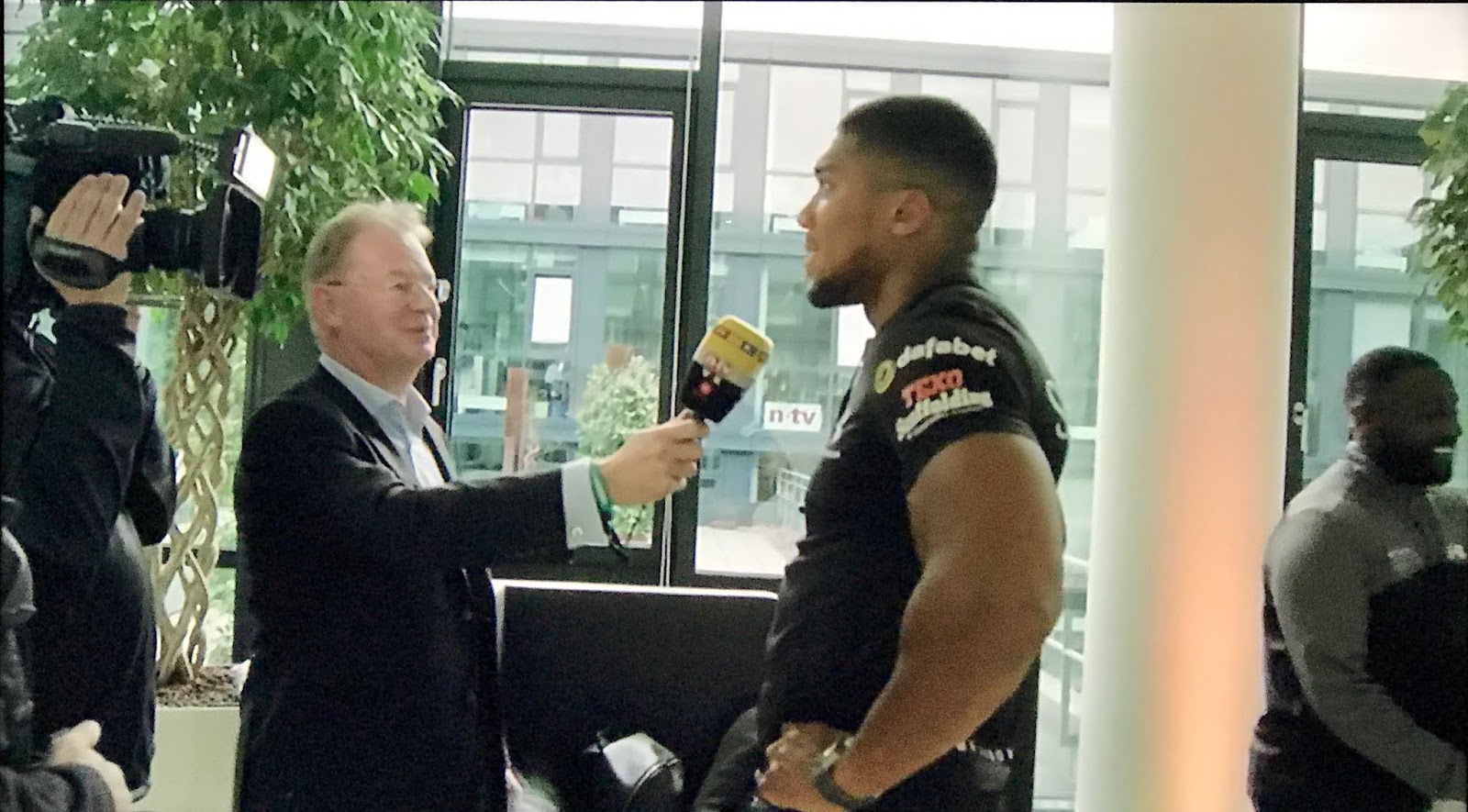
I noticed that they got AJ to recount some memories after the fight, which were placed just before the fight was shown on screen. This is one of the best things that the script did as it allowed the viewer into his mind before the fight. We can't interview him as he is preparing for it all, but after the fight, we can recall those memories and they help build the drama for that final scene. This worked really well and I think if the scriptwriter had not ensured that the documentary had these injections, the final fight would not have been as personal and we may not have connected with his emotions at this moment. They enable us to see the serious and funny side of AJ as a person but also as a character on screen who we are cheering on. This was definitely the strongest part of this documentary. As in our documentary, we generally know what the outcome will be (success/failure of the event) but ensuring that the emotions are shown throughout is important in making that final scene worth it. I personally feel the scriptwriter should have spent more time on the opening and middle scenes of this documentary to bring more of AJ's personality out. It would have meant the final fight was a life/death situation in his head.

The final event speaks for itself in many ways but ensuring we capture the moments, the ups and downs, is important to the ultimate meaning. I would have liked a little more reflection after the fight, about how it went and what's next, but maybe it did not fit into the time-frame of the project. Overall this documentary is a good base, but as a scriptwriter, I wish they would have gone deeper and shown the struggles a little more. Too many things are glossed over. The fact that there is so much unneeded content instead of a deeper backstory means that the scriptwriter did not do the best job in this documentary. The documentary is still enjoyable and tells the story adequately. But, when this story is one that could have touched many people, you are disappointed that it does not have the expected impact.

Wednesday, 3 October 2018
Pre Production - Current Contributor Profiles
This blog will explain the main character profiles in our project at the time of writing (They are subject to change as the script adapts). We will have myself as the presenter/contributor but also other key characters that will help move the documentaries narrative along.
Myself - Presenter/Contributor
 It is important to clarify why I want to be the presenter of this project and why we are not hiring someone in to do this job.
Motorsport has been a part of my life since I was 5 or 6 years old. My father always used to watch it on the Television and this meant I started watching it and found interest in the sport as well. Every weekend we would watch some sort of motorsport and in 2005 I went to see my first ever motor race at Brands Hatch in Kent.
Ever since I have been attending events all over England and recently I have made the trip abroad to watch large saloon car races and Formula One races. My interests in motorsport didn't stop at watching it on TV and visiting events. Very early on I started filming the races with my little camcorder and put together little montages in my spare time. Over time I started to film more and more and in 2011 I started posting these videos to YouTube.
 Along with other motorsport content, I started to grow a community around my videos and turned my hobby into content that people started enjoying. This thoroughly has involved me in the world of motorsport since it is a massive passion of mine and one I don't think will ever leave me.
Recently I have started presenting pieces and conducting interviews with motorsport drivers and I found I also enjoyed this side of the subject as well. Motorsport has engulfed me and is now my main hobby and interest away from University and filming.
 The reason why I think now is the correct time to do this documentary, is I have grown my social media side up to a point where I am happy and I am looking for new challenges. I have always wanted to race a car but have never put the plans and money together to make it happen. With a little forward thinking, I put the money aside to help make this dream a reality.
This story will be a great personal journey for myself, as when commentating and giving opinions on motorsport, you sometimes forget how hard the sport is. This documentary will help prove to myself and others what an incredible athlete you have to be to be one of the top motor racing drivers.
 This documentary would be a great personal journey and means a lot to me, which is why I think a journey like this needs to be undertaken by someone who has a true passion for the subject. This way we can capture real emotions and show what it really means to me as the presenter. If we hired in a presenter, it is unlikely they would have the same passion for motorsport that I do, meaning they may not give a great "performance" as they don't find the subject matter interesting.
As the presenter, I will lead the documentary and there will be obstacles placed in front of me that I need to complete before my first race. The documentary will broadcast how I overcome these and the stresses and emotions it brings out in me. I think as I have a big passion for the sport, using flashbacks with the help of archive material will help consolidate how much this subject matter means to me.
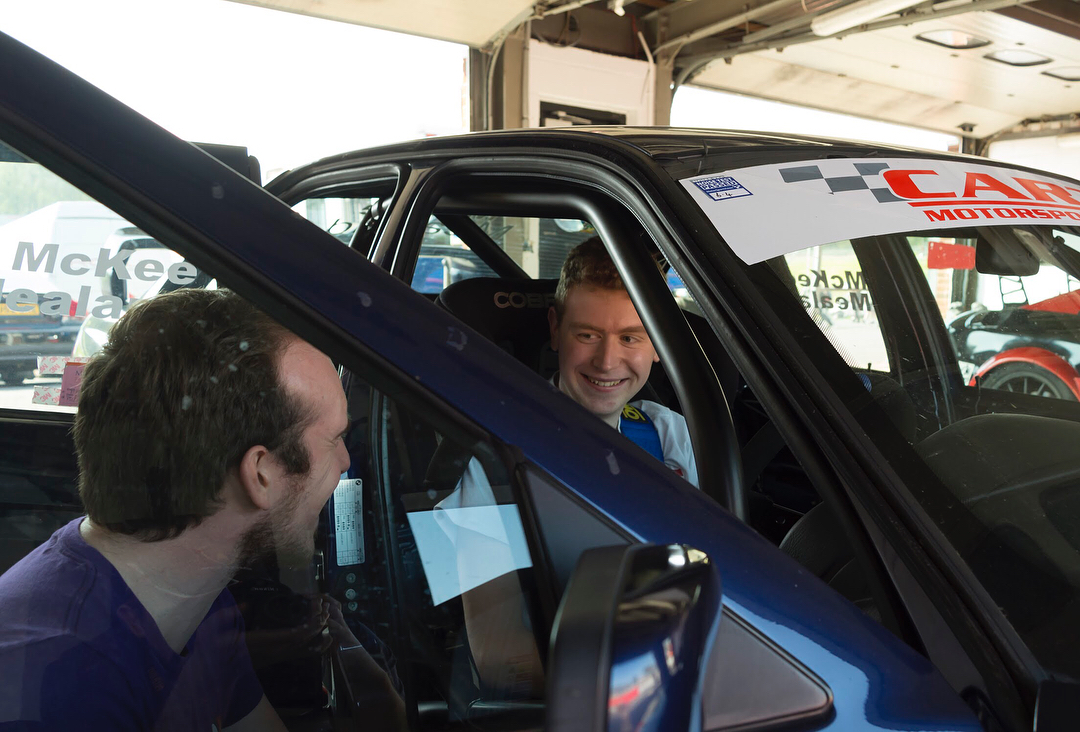
Sam McKee - Co-driver
 Sam owns and drives the car that I will be sharing in this documentary during the main race. In doing so, he will be a big part of the documentary and his thoughts and opinions will be broadcast, especially in the second half of the documentary as the race becomes closer.
 He will help guide me into performing at my best race day and his voice will be one that is heard more than any other contributor in this documentary. After meeting Sam on several occasions, not only is he a good driver but a great character at the same time. His energy and enthusiasm will help, especially if I get into a situation in the documentary where I am nervous and worried.
Sam won't have any scripted lines, but the camera operator may ask Sam a few questions while I am on track so that we can hear his opinions and get to know him more as a character. I would like the viewers to get to know Sam well as he will be a great attribute to this project.
From research, it is clear to see that documentary viewers do not want to hear the same person speaking throughout the documentary. We need to be able to connect to different characters so that the documentary is not biased just to one opinion.
Sam is looking forward to the process of this Documentary and I am looking forward to working with him. As the script adapts I want to find ways to enable him to show his personality and enable him to have a voice.

Bruno Spengler
Bruno will be the third main character in the documentary. He is a winner of Europe's top Touring car series and a factory driver for BMW. I have been lucky enough to work with Bruno before on separate projects and we kept in contact and we arranged some filming days over the summer. As a professional level driver, he will be able to give me insight about the ups and downs of motorsport and what to look for when I go to race for the first time.
 Bruno also gave me some technical knowledge about what to do in certain situations when the car is behaving in a certain way, how to deal with how to effectively start the car off the grid. He also gave us an in-depth look at his safety equipment which is vital in keeping the driver safe while at the wheel. Bruno will be our Expert through the documentary and we aim for him to appear on multiple occasions when I need advice on a specific topic.
I am happy to have built up a friendship with someone who has accomplished so much in motorsport, and the fact he wanted to stay in contact and help means a lot to me for this documentary. It adds a level of authenticity which it may have not had if no professional drivers were included.
 Other Motor racing drivers
Bruno will be the main source of information when it comes to the technicalities of motorsport, but over the summer I was lucky enough to attend Three DTM (German Touring Car) events and I conducted interviews at all three with questions relevant to this unit.
 I asked around 10 top professional drivers their advice in specific situations in motorsport and they also gave me advice on what I should be doing when preparing. I asked different questions, depending on the driver, to make sure I had a broad range of topics and opinions covered. Like Bruno, these add a level of professionalism to the documentary, as we have a number of high-figure drivers included in the documentary which helps give the subject matter and documentary credibility.
Friends and Family
I don't expect my friends and family to have a major role in this documentary but there is a strong possibility that they may be included in reaction shots or short one line quotes throughout the documentary. It is important to note they could be included, but not in a major way. I would like to speak in the documentary with my Dad, as he is the person who got me into motorsport. But I understand that he really doesn't like being on camera so that probably won't happen. I hope that a few people will be involved in the project just because it adds another level of proof about how much this subject means to me. When I start to lay out the script properly it will enable mt to see which scenarios would be good for a small sequence with a family member or friend.
As the script evolves I may decide to further include my family members if it helps the viewer to be immersed in my journey. Knowing my Dad, we would have to find a way for him to be part of the documentary without him having a camera in his face. There are ways we can get around this, use of a long lens or a go pro in a car. We will see how the script evolves and understand then how much of a role my parents will have.
Myself - Presenter/Contributor
 It is important to clarify why I want to be the presenter of this project and why we are not hiring someone in to do this job.
Motorsport has been a part of my life since I was 5 or 6 years old. My father always used to watch it on the Television and this meant I started watching it and found interest in the sport as well. Every weekend we would watch some sort of motorsport and in 2005 I went to see my first ever motor race at Brands Hatch in Kent.
Ever since I have been attending events all over England and recently I have made the trip abroad to watch large saloon car races and Formula One races. My interests in motorsport didn't stop at watching it on TV and visiting events. Very early on I started filming the races with my little camcorder and put together little montages in my spare time. Over time I started to film more and more and in 2011 I started posting these videos to YouTube.
 Along with other motorsport content, I started to grow a community around my videos and turned my hobby into content that people started enjoying. This thoroughly has involved me in the world of motorsport since it is a massive passion of mine and one I don't think will ever leave me.
Recently I have started presenting pieces and conducting interviews with motorsport drivers and I found I also enjoyed this side of the subject as well. Motorsport has engulfed me and is now my main hobby and interest away from University and filming.
 The reason why I think now is the correct time to do this documentary, is I have grown my social media side up to a point where I am happy and I am looking for new challenges. I have always wanted to race a car but have never put the plans and money together to make it happen. With a little forward thinking, I put the money aside to help make this dream a reality.
This story will be a great personal journey for myself, as when commentating and giving opinions on motorsport, you sometimes forget how hard the sport is. This documentary will help prove to myself and others what an incredible athlete you have to be to be one of the top motor racing drivers.
 This documentary would be a great personal journey and means a lot to me, which is why I think a journey like this needs to be undertaken by someone who has a true passion for the subject. This way we can capture real emotions and show what it really means to me as the presenter. If we hired in a presenter, it is unlikely they would have the same passion for motorsport that I do, meaning they may not give a great "performance" as they don't find the subject matter interesting.
As the presenter, I will lead the documentary and there will be obstacles placed in front of me that I need to complete before my first race. The documentary will broadcast how I overcome these and the stresses and emotions it brings out in me. I think as I have a big passion for the sport, using flashbacks with the help of archive material will help consolidate how much this subject matter means to me.
Sam McKee - Co-driver

 He will help guide me into performing at my best race day and his voice will be one that is heard more than any other contributor in this documentary. After meeting Sam on several occasions, not only is he a good driver but a great character at the same time. His energy and enthusiasm will help, especially if I get into a situation in the documentary where I am nervous and worried.
Sam won't have any scripted lines, but the camera operator may ask Sam a few questions while I am on track so that we can hear his opinions and get to know him more as a character. I would like the viewers to get to know Sam well as he will be a great attribute to this project.
From research, it is clear to see that documentary viewers do not want to hear the same person speaking throughout the documentary. We need to be able to connect to different characters so that the documentary is not biased just to one opinion.
Sam is looking forward to the process of this Documentary and I am looking forward to working with him. As the script adapts I want to find ways to enable him to show his personality and enable him to have a voice.

Bruno Spengler
Bruno will be the third main character in the documentary. He is a winner of Europe's top Touring car series and a factory driver for BMW. I have been lucky enough to work with Bruno before on separate projects and we kept in contact and we arranged some filming days over the summer. As a professional level driver, he will be able to give me insight about the ups and downs of motorsport and what to look for when I go to race for the first time.
 Bruno also gave me some technical knowledge about what to do in certain situations when the car is behaving in a certain way, how to deal with how to effectively start the car off the grid. He also gave us an in-depth look at his safety equipment which is vital in keeping the driver safe while at the wheel. Bruno will be our Expert through the documentary and we aim for him to appear on multiple occasions when I need advice on a specific topic.
I am happy to have built up a friendship with someone who has accomplished so much in motorsport, and the fact he wanted to stay in contact and help means a lot to me for this documentary. It adds a level of authenticity which it may have not had if no professional drivers were included.
 Other Motor racing drivers
Bruno will be the main source of information when it comes to the technicalities of motorsport, but over the summer I was lucky enough to attend Three DTM (German Touring Car) events and I conducted interviews at all three with questions relevant to this unit.

Friends and Family
I don't expect my friends and family to have a major role in this documentary but there is a strong possibility that they may be included in reaction shots or short one line quotes throughout the documentary. It is important to note they could be included, but not in a major way. I would like to speak in the documentary with my Dad, as he is the person who got me into motorsport. But I understand that he really doesn't like being on camera so that probably won't happen. I hope that a few people will be involved in the project just because it adds another level of proof about how much this subject means to me. When I start to lay out the script properly it will enable mt to see which scenarios would be good for a small sequence with a family member or friend.
As the script evolves I may decide to further include my family members if it helps the viewer to be immersed in my journey. Knowing my Dad, we would have to find a way for him to be part of the documentary without him having a camera in his face. There are ways we can get around this, use of a long lens or a go pro in a car. We will see how the script evolves and understand then how much of a role my parents will have.
Tuesday, 2 October 2018
Pre Production - Creating A Good Treatment [Lecture]
- A visual treatment is becoming ever more important.
- A title and top line is important in selling your idea.
- Timeliness, Scale and Ambition
- Why is this being broadcast now? What makes it relevant now?
- How original is the idea? Who is the content [documentary] for? How shareable is the content?
- Watch a lot of relevant content - Learn something and watch critically about what works and what does not - Be aware of the landscape and what is already out there
- How distinctive is the content? - What makes the idea unique to everything else out there?
Access, Format & Talent
- First Page - What is this?
- The Format - How is this story is going to be told?
- The story (the heart of the treatment!)
- Style and Tone (Layout for them: Who's the director? What's it going to look like? What messages are going to be broadcast? Who will we meet? What locations?
- Budget
- Schedule
Developing George's Idea:
Documentary series about a drama school in England and Australia, comparing them and then coming together in an ending “Battle”
Collaboration between Channel 4 and SBS 5 x 30 Minutes Plus One 1 Hour Finale
Possible turn around in-terms filming would be 2-3 months
Focus on specific characters to understand what about drama they enjoy and their life stories
Educating Essex Style - Fixed Camera - Multiple Cameras but not a massive production
Budget $10,000
Two Schools, Two Cultures, One Dream
Monday, 1 October 2018
Pre Production - Project Evolution SEPTEMBER
It was great to get back to University and finally start the third year of our TV Production course. I had been working hard on my project over summer which has led me to be in a good situation in September. One of the first things that was decided in September was that Cailan would definitely be joining the group. I was really happy about this because we had worked really well together in the Transition unit and we had all worked together on our previous project, "Carology" in Year2 and "Big Fat Lies" in Year 1. These monthly blogs are to show what I did each month, further detail can be seen in my other individual blogs.
The Idea and Filming Style
I have been working on the idea and deciding how each scene will take place. I was trying to look at the original plans that I had and understand their importance and how best it should be shown. At this stage, I am planning for it to be a documentary about motorsport so including subjects such as sponsorship and fitness are going to be key. I have looked into inspiration material and chosen documentaries such as "Joe Weller: Fighter" and "Walk the Walk by XO". These are documentaries in which the presenter goes on a journey and their journey is mixed with some stunning visuals and editing. I am still at the very early stage of development but these were good reference material for me in this early stage.
Understanding what I need to include in pre-production
Going into pre-production, I was unsure exactly what I would need to complete to ensure that I got the top grade that I needed in this unit to elevate my overall grade to a first. I knew that I would be working on pre-production alone as my team that will work with me in January have decided to do hypothetical projects. After chatting with Simon I started to understand where I should focus my attention on this unit. I was worried about overstretching myself on this unit as I would have to liaise with George about jobs he would be doing as a producer, but I needed to be aware that he also needed to focus on his role.
Who are the contributors?
I had been lucky enough to interview a lot of fantastic drivers over the summer of 2018 and I kept these to use in my documentary. However, upon further reflection, I don't think they will all be able to be used. While they were all well shot and had good lighting and audio, a lot of them were not personal enough and some of the drivers I interviewed did not give great answers. I started to change my mind and realised that I would probably have to shoot more interviews. I have decided that once I get a better understanding of what story I will be creating I can decide what interviews I am going to do. I now know the ways to get the best out of an interview and I can use these tips to help me have a better story.
Sam (my teammate in the race) will also be a part of this documentary, I was unsure how much he would be involved but it is clear that he will have some input to the story to allow it to gain significance and personality. I have thought about scenes where he speaks to the camera while I am driving around and possibly gives opinions on what he was thinking when he was in the same situation to me. These moments will allow the story to have a little more weight to it as we can see that this is a feeling that all people go through, not just me!
Other contributors will involve Bruno Spengler and some kart drivers. Bruno was great and went over the top of what I expected him to do considering he is a professional athlete. We filmed a couple of videos where we were actually on the track and he explained to me how I best start a motor race and make decisions out on the track. This is a key sequence that I want to include, even if the story changes. I also want to speak to some young kart drivers who can give me insight into what my first steps should be. This then can relate back to me doing my fitness tests and raising money.
Learning how to script
While I had done a documentary script before, a lot of what happened in that documentary was pre-planned and we knew what was going to happen. The great part about a documentary that goes on a journey is that we do not know what is going to happen, this means scripting is slightly different. Through knowing this, I wanted to get an expert opinion on how I should approach my script. I spoke to Helen and she showed me her script from a documentary that she just developed and helped me understand how I should start.
It seems that I need to lay out the script with visuals on the left, the audio/soundtrack in the middle and a predicted time on the right. In each box, I will write in as much detail as possible, what is going to happen in that scene. For example, for visuals, I will write down what I predict will happen in that scene and then write down what shot types I plan to use. Using this to good effect will enable you to almost picture the scene in your head when you're setting up to shoot. Likewise, with the audio, a lot of what is going to be said is going to be actuality, so you should write in that block what the "ideal" audio for that scene would be. Time is only an estimate but it gives you an indication of how you can split up 20 minutes into your intended sequences. I now knew that I would write the ideal situation for each scene, but knowing that what is actually said could and will be changed. It was a rapid learning experience but it enabled me to understand how I approach my script. Helen also showed me it's evolution and said not to worry if it looks basic, to begin with, as it will only improve with time.
Research into Directors, Writers and Presenters
In September I started to research into all of my roles which allowed me to realise the scale of what I need to do. These blogs can be seen here:
https://alexbaldwinmedia.blogspot.com/2018/11/pre-production-research-into-presenters.html
https://alexbaldwinmedia.blogspot.com/2018/10/pre-production-research-into-writers-of.html
https://alexbaldwinmedia.blogspot.com/2018/09/pre-production-research-into-directors.html
I will continue to update these as I watch more and these vital pieces of research have already started to inform my decisions that I am making. This is critical research that I may have lacked in the Transition unit so I was aware that I need to up my game. I am happy with the research that I have completed so far and I look forward to doing more.
Overall, we have only been back at University for a couple of weeks but I have been able to evolve my project quite substantially in that short time. Some great help from Simon and Helen, along with peer feedback has started this evolution. A critical understanding through research into my roles has also meant I do not underestimate the job I have.
Subscribe to:
Posts (Atom)
-
 As I will be the camera operator on two VT's on this live production I wanted to further my knowledge of the reason they are used and wh...
