Thursday, 21 February 2019

Production - Adapting To Crew Issues [RESEARCH]

On a recent shoot date, we had the issue of a crew member not showing up, when we had planned for a multi-camera setup. This left us in a bad situation as we needed to understand how we would fulfil my shot list, with only 2/3 of the crew available. This research was prompted by this event and it will allow me to plan going forward so that if we ever have this issue again, we know how to work and prioritise areas of the shoot date.

My research quickly led me to a number of websites which shared their opinions through personal experiences of having a similar problem. Getting real-world feedback was essential to me as it would allow me to assess our situation and draw as many parallels as possible. Larry Brody's article on stareable.com stated: "Always, always already have a backup plan, especially for people you don’t know very well. When shooting the pilot for my web series, Brains, my cameraman didn’t show up after the first day, because he lost his camera and all of the first day’s footage. Thankfully, I had brought my simple camcorder to set to record behind-the-scenes videos, and we ended up using that camera for the rest of the season." (stareable.com, 2017) The person who never showed up on our shoot was a first year none of us bar George had ever met. We all trusted that he would turn up and be professional, like the rest of the students I have worked with on this unit. This research leaves me to assess myself and realise I did not take into consideration that we could have a no-show and leave us with issues. I never made plans for what we would do if someone did not show up. Thankfully, this was not a shoot date in which the extra crew would be an essential part of the production (on a secondary camera getting on track shots) but nonetheless, I should have made further plans as this could have happened on a day in which the extras were essential.


It had crossed my mind that the crew member who no-showed may have been considering if this was worth their time after they had agreed. George had pitched our idea to the first years and we had a great amount of interest, and George chose the person who seemed most interested. I also believe that we have a very good policy within our group. Of course, we do not have the financials to pay every crew member that helps, but we provide a quality lunch and travel expenses for each member who could not be picked up by the producer. This alongside working on an exciting 3rd-year production made me feel that there was no reason to question if this was wasting their time. I fully believe that George did all he could to show our project for what it was and explain what was expected of any crew. As every shoot day was important to us I was disappointed to be let down. However, I could not let this affect me as I was out on track and could not be worrying about the crew issues at the time. I got on with my day and only after, when writing my blogs, was I able to think about the issue we had. Thankfully, on the day George did a fantastic job of getting on the extra camera and capturing a wide range of great b-roll, but in reality, we have already learned that he should not be doing this because of his role as producer. George stepped in on the day, but this should only ever be a last resort unless already decided upon before we arrive. I have complete faith in George as camera operator, but he needs extra time and plans to make sure he is happy, especially when his producer roles have greater importance.


This advice was drawn directly from the television industry, but further research into this subject had to be conducted into other areas of work due to the nature of my problem. The issue of no-showing is that it affects the rest of the crew, not just the one who has to cover the missing person. It stretches the crew beyond what they expect to be doing, meaning they enjoy the day less and also may come away with a lower quality product. My research into other industries demonstrated that no-showing is a wide problem, one which is seen across the job-spectrum.

At the time, I was not annoyed at the no-show as I was confident in the team and their ability to process accordingly. It was actually in hindsight where I found myself being frustrated, as I would never leave someone in the cold like this. Thankfully I was calm after understanding the situation and we made some great decisions on the spot to ensure the day was still productive. When researching into staff not turning up, I came across various websites which stressed the importance of staying calm in the moment: "Resist the urge to get angry right away. Remember, your employee knows the rules, so there may be a legitimate reason that they couldn’t make it to work or call to let you know. Don’t jump to conclusions and assume that they’re just doing it to be spiteful or that they’re a bad employee. That’s just a recipe for disaster. Instead, stay calm, think positive, and focus." (getsling.com, 2018) . I like to feel I am level headed and when the news was given to me I did not get angry and simply tried to understand the situation and what the crew would have to do to ensure it would not matter throughout the day. I spoke with the team at the time and we came up with a short term fix to the issue, but it is certainly one we do not want to repeat in the future. Overall, however, I am happy that I did not get angry about something I could not control, the best way to move on was to understand how the day would run and I decided on the spot how we would proceed and the day was still very successful.


A lot of the fixes that I researched had a direct correlation to someone in a job missing a day, therefore a lot of what was in my research had no impact as we could not benefit in any way from quizzing the crew member who did not show up. My best method was to think about what I would do in the future if we came across the same scenario. We have a large number of shoot dates and will undoubtedly need help so I would be silly to think we would not be needing any external help going forward.

After understanding the situation we were in, I think I did the only thing we could have at the time which was asking George to go on the camera, showing him my plans to ensure he knew he was up to speed. However, we may have been able to avoid this situation in the first place if we had asked someone closer to us to come and help. "Direct contacts you may have made in school, try to think about who might be able to help you, or who may know people who may be able to help you. For example, asking producers who hire crew often may be a good start" (pond5.com, 2016). While not always feasible, it certainly helps as a director, knowing the crew members on set. I personally feel we should have contacted people in our year before the first years, as this would have allowed us to know the personalities and decide upon who would be the best person for the job. George possibly made it more complicated for himself, but he did so to try and reach a larger number of people. In hindsight, and going forward, we will be typically using people within our year group for our project as well as friends who have video production skills if absolutely needed.


"Hiring" people we know, as well as working on detailed plans, will be my focus going forward. As a producer, George has agreed that if we ever get into a similar situation, he will be happy to be on a secondary camera as long as he gets time to read all of the plans beforehand. I feel like I've been doing a good job with my pre-shoot plans and I will continue with these and try to go into greater detail to ensure the camera operator is sure of their role. I have also suggested to George that he take a more thorough look at the plans going forward to ensure he knows exactly what would be required of him or any operators on the shoot date. This means that if George does go onto a camera in an emergency, he will at least know what he is doing. This means there is a requirement for me to make my plans slightly further in advance to ensure all crew, including George, know their roles and what shots they need to complete.

We know this is not ideal, as a producer should be able to focus on their role. But at the same time, we do not have unlimited resources and have to be realistic about the number of shoot days we have as well as the times that certain people can help us. This does mean that it is almost inevitable that George will have to help on camera at times because we will be short staffed on a few days. However, as long as my planning is done beforehand and we act in a professional manner on the day, I do not think there is an issue. Part of the challenge of this project has been helping each other with our different roles and while it has been a hard process to grasp, we are doing so in a professional way on the majority of shoots.  I am happy I conducted this research as it allows me to have a good understanding of how we proceed going forward, as well as understanding the approaches needed on the day to ensure we do not let issues like these affect us. I hope this won't happen again, but further knowledge on an issue like this will benefit the whole team.

References
stareable.com, 2017 https://blog.stareable.com/solutions-to-common-on-set-problems-9250871edc90
pond5.com, 2016 https://blog.pond5.com/6343-how-to-find-the-perfect-crew-for-your-film-or-video-production/
getsling.com, 2018 https://getsling.com/blog/no-call-no-show/

Wednesday, 20 February 2019

Production - SHOOT DAY 6 Ford Puma Test

The "Puma Test" was not a sequence we had originally planned. but, as the project evolved over the past couple of weeks, a few unique opportunities became available to me as a contributor. Along with the Formula Ford test next week, I have had the opportunity to drive a race-prepared Ford Puma. This will not feature heavily in our University version of the film as we only have 20 minutes to work with and it will be cut into a 60-second montage on the build-up to the race. As a team, we intend to produce a longer cut when finishing University to show off all the experiences I went through on the build-up to my first ever race. Therefore, as much planning went into this shoot like the rest of my sequences.

Puma Trackday Shotlist:

  • Shots (in car) entering the track. Signs, road signs etc. 
  • Alex walking to pitlane (M/S from in front) (M/S from behind)
  • Alex walking through the tunnel (W/S)
  • M/S - Alex greeting the race team
  • C/U Alex putting on helmet + equipment 
  • M/S - As Alex speaks to the team 
  • M/S (In car - Looking out the front windscreen)
  • C/U (In car - Looking towards Alex)
  • Trackside shots (In detailed plan)
  • M/S Alex speaking to team when in pitlane
  • M/S (From side) Alex walking to car, reflecting thoughts to “behind” the camera. 
  • M/S Alex in car reflecting on the day
George had also asked around at University for help on this shoot date as we were low on numbers. He found the help of Gilead from the first year and had rented out a Sony 4k Camera from an exterior website so we would have enough cameras. George would not be on a camera, as we had learned from the license day that he should not be taking time away from his role as producer. George would help the first year understand what was needed and would be free to communicate to the rest of the camera crew when needed. Below is where the camera operators would be placed around the track. We would be using the camera cards I produced for the license day (but didn't end up using because we didn't have the right access). George had secured trackside access today so we could see if my plans from the license day were good. 


Unfortunately, we had an issue when the 1st year who had promised to help us, never showed up at the station where George was collecting him. Once we had resolved the issue of how George would operate today, the crew signed on as official media (Which was great as we were disappointed when we could not do this for the license) and I went up to the drivers briefing. Cailan filmed me as I went about my business which will all add up to some amazing coverage of this day. As we did not have this access on the license day, it was great to understand what we would be able to do going forward. The better access meant we had a much better view of the track for camera operators. Cailan was able to follow me throughout the day instead of running into the issues he faced with the race license (Things such as not being allowed in certain areas of the track).

After the crew had signed on and I had my briefing, the crew went to set up trackside as Cailan followed me while I was run through the process of how the day would work. Part of this was how we could securely mount the cameras into the car. I did have to switch on my director's brain while setting these cameras up, as I wanted to ensure the angle captured would be interesting for the viewer. When we came to set up the cameras, we realised that we did not have all of the correct mounts and joints to get the desired shots. Thankfully, the team I was driving for had some spares and saved us from having far from optimal in-car shots. An example of the in-car shot can be seen, I am really happy with how this looks, with some slight colour correction it will be an immersive shot that will excite the viewer. This was also a good opportunity to test in-car camera locations as we would not have much time to decide these locations on the actual car in April. Small things such as camera placement will make a big difference in the final film, so it was worth spending the time setting them up correctly and testing them today.

Cailan did a fantastic job in the pitlane to secure both actuality of my day, plus shots of me on the track when I was out there. Cailan's intuition allowed us to secure vital extra coverage from various angles around the track which will be fantastic for the edit. I was pleased to see my shotlist and camera plan were helpful as they allowed the crew to have a target of every shot needed to make this sequence work. Going into every shoot we need to prioritise these key shots, as without them it could mean the sequence does not make sense. Outside my shotlist I want the crew to test their skills and pick up extra angles so we have the best coverage possible. Reviewing Cailan's footage, I was very impressed with his work today. He had picked up on a few of his mistakes from the license day and was able to film a much better timeline of my day. You can see the quality of his shots below, these will enable us to have a very stylistic and interesting montage sequence in the University cut. Cailan also filmed my reflection on the day which will be useful for the extended cut and the behind the scenes videos we are creating for our donators on Kickstarter.

As for the on-track cameras, Nick and George did a great job under the circumstances. After the no-show from the first year, the team pulled together to create some fantastic shots that would look incredible in a montage. On future track days (and the race day!) we will have more crew meaning even more camera angles will be captured. The issue with mid-week shoots is that some of our camera operators are not available. One small issue that was communicated by Nick was that the walkie talkie communication could have been better at times. This is something the team is continually working on, as clear communication through this new method won't be perfect straight away. It's important to pick up on these small details so that we can learn from them and create a good working environment within our film crew, where everyone speaks about any issues they have. As for the footage on track, it will enable us to mix them with inboard shots to create an epic montage. I am really looking forward to seeing this footage in a timeline, which will also allow me to understand if we need to adjust any camera angles now the team have experienced the trackside access.


Considering I have been struggling with food poisoning the past week, I am very pleased with how the team helped me get through it and worked extra hard to ensure today was a success. We captured some amazing footage which will look great in a montage in the sequence where today will be featured. Even though today will only be in our main documentary for 10-20 seconds, we planned as thoroughly as we will for the biggest sequence. This planning and detail allows the whole documentary to have a very consistent tone throughout, allowing our documentary not to dip in quality. I was very impressed with the whole team today, it certainly shows we have learned from previous mistakes and are now in a much better place. I am excited about our next shoot on Thursday, which will be various interviews with disabled drivers at Silverstone. I am looking forward to seeing how people allow nothing to get in the way of their dream.

Sunday, 17 February 2019

Production - Why Should Interviews All Be Unique? & Assessing Our First Interviews [RESEARCH]

After our two recent interviews, I wanted to research further the importance of our interviews all being unique in terms of both their filmic style and location. This research blog will look into what I should be doing before our next interview and looking at the different styles I could adopt for those that we have going forward. It will also be looking at the styles we have already used and understand if they could have been improved in any way.

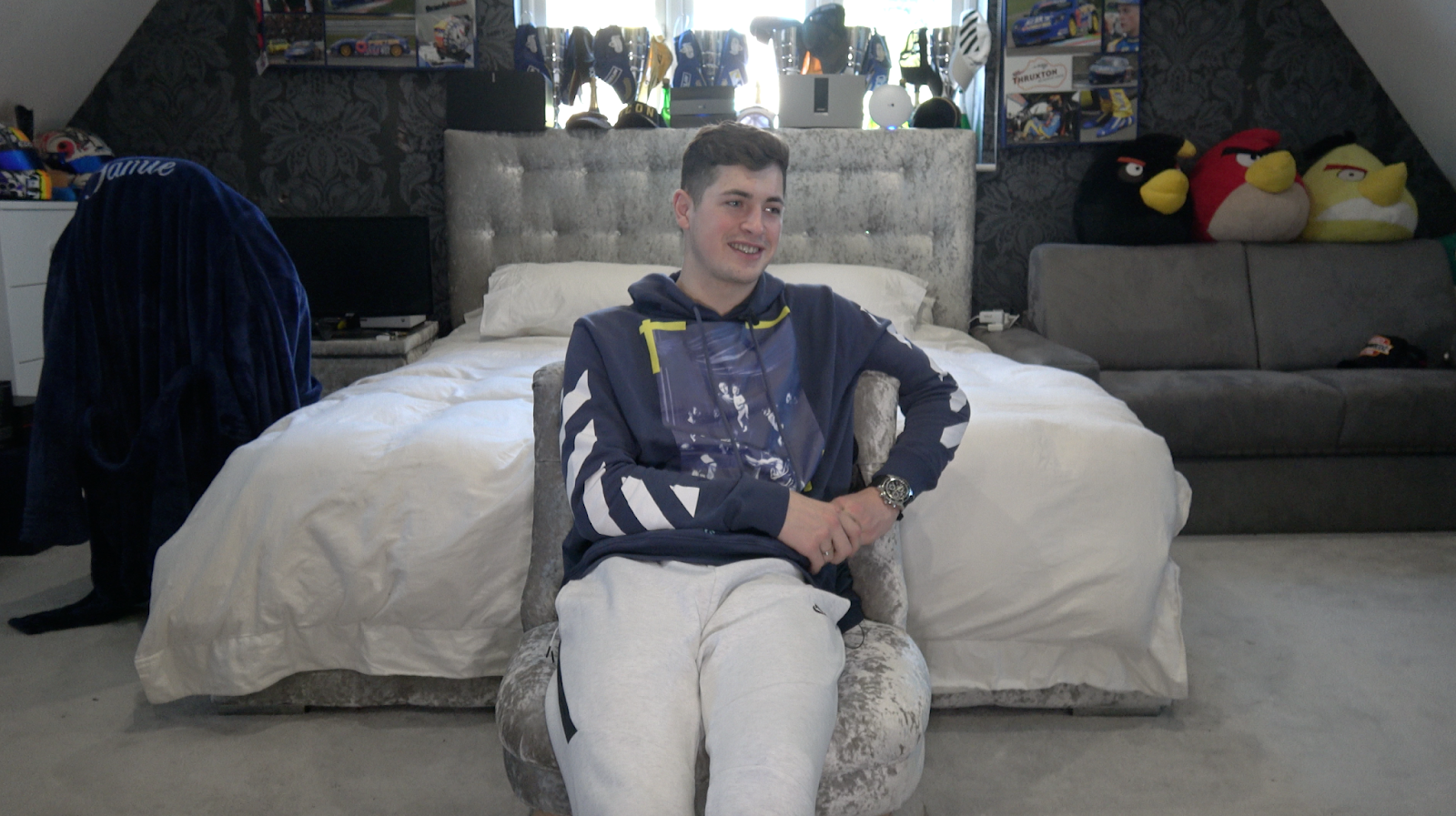
Currently, our interviews have been set in two very different locations. One at a motorsport workshop and the other at a house in the driver's bedroom. While both are different, I certainly see the workshop sequence being more visually interesting. I say this because we are involving ourselves in the environment of motorsport much more than when in Jamie's room.  Jamie's room still gave us a nice backdrop thanks to the trophies and motorsport memorabilia, but it is not as engaging to the viewer as an interview which is more dynamic in its movement.


The problem is that we cannot have all of our interviews looking the same because then it would take away the special nature of the walk and talk style of the Dan interview, so my challenge is to make all of our interviews unique in some way. "Audiences may not remember the background, but they will remember the impression it gave them. Bookshelves can make an interviewee look educated; computers can make them seem tech-savvy." (www.vidyard.com, 2019) This extract shows that we have done a good job so far at ensuring the viewer knows where we are and that the context of the interview is not lost within the surroundings. We have certainly done a great job with the mise en scene in our interviews so far because, as a viewer, I know exactly where we are thanks to the background which helps emphasise the points made. This is backed up by Steve Stockman who says "The same interview with a hedge-fund manager communicates different information if it’s in his marble and polished wood office vs. the floor of a working factory. An interview against the wrong background is an accidental miscommunication." (tubularinsights.com, 2011) The interviews we have conducted have been placed in the right area, without a doubt, which gives me confidence that our upcoming interviews will be visually as interesting. My challenge going forward is to ensure they look different in their visual style.


Aside from the point of making our interviews visually different, it is important to note how we have maximised the use of our contributors so far. Steve Stockman also says: "In a normal conversation, you respond to what the other person says. A good interview works exactly the same way. Listen well and allow your natural curiosity to guide your questions even if it leads you to something you weren’t planning on asking." (tubularinsights.com, 2011). This is especially the case for the Dan interview as you see both of us on-screen and it really looks like a genuine conversation, even though I have pre-planned answers. This is obviously thanks to Dan as a contributor who made it easy to go about these questions as if they were part of a normal conversation. Jamie was also good to have a back and forth conversation with, but that may have been slightly lost in the fact that you don't see me on screen, which is still a decision by Cailan that I disagree with. It did not allow the conversation to feel natural in the same way it did with Dan. Without seeing me on screen it looks like I am the interviewer and he's there to answer questions. It didn't feel as natural when looking back at this in the edit and I know going forward that we should not conduct an interview in this way because it loses the personal touch we have been aiming for throughout this documentary.

The walk and talk and interview styles, which are similar, allow both myself and the person of interest to be on screen, seem to be the most visually interesting in a documentary like this. "Having both the subject and the host in the shot doesn't have to be "talk show" style, it can be two people walking down a road, or sitting on a bench. This style of interview is often used when the host is part of the interview's selling point because of their position or reputation." (http://schoolvideonews.com, 2019) While I do not see myself as the host, I am the person that this story revolves around, which means I am the one who is guiding this documentary along through my various challenges. I am, therefore, a part of the selling point because the viewer is seeing me going on a journey. This means that an interview without me being on screen does feel strange, as the viewer is following my journey.  If we had more than 20 minutes to work with in terms of documentary length, we may be able to learn more about the contributors we are involving, but sadly we cannot afford to do this.


Having understood all of this research I am in a position to understand what style of interview works and how I go about filming the last two (possibly three) interviews that we propose. I think it is important that both myself and the fellow contributor are on screen at all times to ensure that the "interview" looks and feels like a conversation."Since television, specifically, is a visual medium, the client’s physical demeanor and the style of his or her presentation are just as important—if not more so—than what he or she says." (prnewsonline.com, 2016) Doing this will allow the viewer to further connect to my story as well as getting to know the fellow contributors personalities through interviews which are much more natural than the typical, question/answer format.

This leads me to believe that all our interviews should be unique as it allows the four or five contributors to be clearly different, hopefully using the filmic style to their advantage to ensure the interview is as natural as possible. Allowing all the interviews to have their own style will also show that we have been creative with this documentary and not just stuck to a method that we know works. I want to challenge myself in this unit and part of that is allowing new ideas to be tried to ensure the documentary has variety.

Therefore my initial plans for the upcoming interviews are as followed:


  • For the Bobby interview with Team BRIT, it will be a sit-down conversation, but we will have the garage and car in the background, with Bobby and I both on screen with clear eye contact between us. This interview will certainly be a challenge with the unpredictable background and people walking in and out of shot behind us, but I know it will work with the anticipated multi-camera setup. One close up on myself and Bobby and a wide showing us both and the backdrop. It is certainly bold to attempt an interview with so many variables, but I know it will work having got to know Bobby and his personality.
  • The Bruno interview will be standing up outside his motorhome at the BMW garage. There will be an interesting backdrop with the pitlane and a lot of motorsport equipment, which will allow the viewer to be very aware of where we are. As the Dan interview worked well, I think the Bruno interview will be interesting as we are standing up and having what appears to be a normal conversation allowing this scene to feel very natural. 
  • For the interview with a female driver speaking about fitness, my plan is to do a mix between the walk and talk seen in the Dan interview as well as a sit-down interview as was seen in my research a few days back, where both myself and the contributor are on screen. The questions will be separated into two slots to enable a cut between the two to be natural. The importance of B-ROLL to cover a section like this will be very important.

Overall I feel I am in a good place to go ahead and fully plan these interviews after understanding the best way to engage the viewer and also what we could have improved in our first interviews. We have taken on board our little mistakes in both interviews to ensure the coming ones will be of an even higher quality. This research has also shown me there are various options when completing interviews which are closer to an actuality interview. This knowledge has allowed me to appreciate the importance that all of our interviews should be unique in some way. It allows the documentary to move on a continuous journey, rather than using the same format for every interview. I am very excited to plan these interviews fully now I have the research in place, and I expect these new ones to be of an even higher quality than the last two. These plans should allow us to extract the best information from our contributors, meaning our documentary is the best version possible. 


References 
www.vidyard.com, 2019 https://www.vidyard.com/blog/5-tips-make-interview-style-videos-engaging/
tubularinsights.com, 2011 https://tubularinsights.com/shoot-video-interview-doesnt-suck-10-tips-ignore/
http://schoolvideonews.com, 2019 http://schoolvideonews.com/Broadcast-Journalism/Interview-Styles
prnewsonline.com, 2016 https://www.prnewsonline.com/tv-radio-interview-step-step-guide-prepare-success/

Saturday, 16 February 2019

Production - How To Effectively Use Lighting in Actuality Sequences [RESEARCH]

One of the biggest challenges we have faced so far is the lighting in our actuality sequences. For instance, the interview with Dan is grainy because we did not expect the lighting inside the workshop to be as bad as it was and we had not prepared an option if this was the case. The sequence we shot is in no way bad, we can use it and solve the majority of issues with the lighting through subtle editing, but I need to look into this topic further as I want to avoid any issues like this in the future.

One thing that encouraged me when looking into lighting and how we could improve were the words of Daniel Haggett who is a professional Lighting Cameraman and DoP "Don't be too precious of filming something in a considered and beautiful way, if you see something happening that you know will make a good story, shoot it. You might see something that is a bit far away, and handheld, on the long end of the lens, it won't be too stable, shoot it anyway. Sometimes you might need to run and the camera will be wobbling all over the place, shoot it anyway."( www.danielhaggett.com, 2019). Knowing this makes me realise that I made the right decision when realising we had an issue with lighting at the Dan interview. I thought about the possibilities but the only realistic one was to record it with what we had available to us. Thankfully, on this occasion, it worked as the content of the interview was fantastic and we obtained a number of fantastic responses for our documentary. If we had got stressed over the lighting after arriving we may have decided to film in a different area of the garage with less character. Thankfully we filmed it as planned and we got a great sequence out of it. But it is certainly worth noting how we could improve our lighting in these scenarios in the future.


General advice on shooting interviews was helpful but would not have helped in the scenario we were in on our shoot. The advice from lightsfilmschool.com was: "If you’re shooting indoors or in a studio, the basic 3 point lighting technique is a favourite amongst filmmakers. It fully exposes the facial expression and emotions of your subject as well as isolates them from the background and hides unwanted shadows." (lightsfilmschool.com, 2017). The problem for us was that in this sequence we were moving and any fixed lighting would have most likely been a hindrance to our shoot and also made every part of this sequence feel very staged due to perfect lighting. This research actually really helped me though, when understanding what we do with the Jamie interview which we filmed yesterday. I started this research directly after the Dan interview and found this advice particularly important when planning for Jamie. In Jamie's interview, we took his room into consideration and realised lighting was needed to ensure we maximized the mise en scene. We set up a few smaller LED's in this shoot to balance out the light on his face and I think this allowed the shots, especially the widest one, to have a fantastic dynamic range between the foreground and background. The lighting certainly allowed us to make the Jamie interview look more professional and this was thanks to this research as well as understanding the issues from the previous interview a few days beforehand.

After this, I was still a little unsure about to how we light scenes like that with Dan in the future. We have a planned interview with Team BRIT [A disabled racing team] coming up in the next few weeks which will probably take place in a similar environment to Dan's. As I plan for this scene to be sitting down I can take advice from the previous paragraph, but lighting actuality still remains a problem. A quote that struck me when compiling this research was from Jane Chapman: "Filmmakers will choose almost instinctively to shoot in eye-catching places; they will study the available light for the best position, think and look around the action, and consider shooting higher or lower, using shots involving windows, door, reflections or mirrors for instance."(Chapman 2006: 87). The whole reason for the Dan interview to be filmed in the walk and talk style that it was, was to be different and capture the viewer's attention thanks to it being unique. The fact that I made the right decision even though we had bad lighting was a relief as I was under pressure to make a decision at the time. The interview is much more dynamic than if we decided to film it at a desk or wholly inside the car that was shown towards the end of the scene. Still, this does not solve my issue if we were to conduct something similar in the future.


After reading an article on Premiumbeat, it seemed that the answer to my worries was underneath our noses all the time. When speaking about small LED lights, writer Noam Kroll said: "They are so light and portable and can effectively allow you to shoot well in nearly any situation." (Premiumbeat.com, 2015). We had access to fantastic LED lights at University as well as multiple smaller ones that George personally had. We had used the latter for the sequence with Jamie but they still did not give the power range that the ones at University had. It may sound silly but none of us thought we would need lighting of this nature in a scene where we expected good lighting. Therefore, the issue of not scouting beforehand (because it was located north of Manchester) along with the bad assumption it would be well lit led to our issues. If we had asked Dan beforehand what the conditions were like we may have been able to avoid this issue. Alas, we still came out of that shoot with a great and very unique interview which we are all proud of, but understand the steps we can take in the future to ensure the lighting is perfect.


Our rule going forward is that if we even have a small suspicion that we may need lights, we should bring them just in case. "Even if a camera is good at getting a shot in low light, adding light will absolutely improve the shot." (desktop-documentaries.com, 2013) Even if they are just the ones that George has personally, it will allow every scene to have an increase in lighting to improve the shot. We doubt there will be many scenarios where these will be needed, but we are learning from the mistakes we had at the Dan interview and taking them forward to ensure it does not happen again. This research has allowed me to realise the importance of taking lights, even if we may not need them, along with understanding the importance of capturing the key moments of a documentary, even if it means the lighting is not perfect. I certainly hope we don't run into the same issue once again with lighting, but I doubt we will after key findings in this research and not just ones about lighting. I am very happy to have conducted this research, as it will allow the documentary to look much more professional throughout.


References


Friday, 15 February 2019

Production - SHOOT DAY 5 Jamie Caroline Interview + Fitness Test

Our 5th shoot day comprised of an Interview with Formula 4 and Ginetta champion Jamie Caroline and a fitness test shoot in the afternoon. Jamie's interview had been arranged by me as I had been speaking to Jamie for a number of months. George had done a great job in securing a gym which would allow us to film and also give us free training and advice.

Jamie Caroline Interview

In the morning we headed to Jamie's house where our interview was to be filmed. In our Billy Monger reference footage, Jamie appeared and this was also filmed in his room. This meant we had a good idea of how the room was going to be laid out and how we could make our scene different to that in the Billy Monger documentary. I had planned a three-camera setup with Cailan. We initially had different ideas, but we came up with a compromise which allowed us all to be happy. This interview was very different from the one we filmed on Tuesday. Cailan had stated that I should not be on screen when this interview is taking place, as it may make this scene awkward. At first, I was against this, but after reviewing the footage I think this was a great decision by Cailan. If I were to be on screen, sitting next to Jamie, it would have been very awkward and not had the tone we have followed throughout this documentary. Instead of this, I will be sitting behind the camera asking Jamie the questions. Jamie would be looking toward me as he answers them. The compromise I found with Cailan was the three shots to be as followed:
  1. W/S with Jamie COF as he looks towards me. (Tripod)
  2. M/S with Jamie LOF as he looks towards me. (Tripod)
  3. Camera capturing various C/U of Jamie. (Speaking, hands etc) (Handheld - Connor)
Before the interview, we also filmed the actuality where I knocked on the door and followed Jamie up to his room. This allows the viewer to see that I still have a presence in this scene. The difference is that I won't appear on the screen when the interviews start. As stated, I did not think this would work at first. However, after reviewing the footage I think it worked better as Cailan planned. This also gives me a lot of confidence going forward, that Cailan will be making the correct decisions when needed. The actuality sequence was filmed and will allow us to use voiceover to introduce this segment. I had wanted to capture drone shots in the hour prior to this, but the drone was not available on the day so we will have to go back to the location just to get drone shots.


The interview itself went much better than expected. I say this because I was under less pressure as I was not on screen. This allowed me to focus on the questions while taking in what Jamie was saying. If I was sitting next to Jamie, it would have created a strange dynamic, one that would have been hard to edit around. The three shots we filmed will give us a lot of options in the edit. Something we had to account for was the lights. Therefore I switched the cameras into an FPS that would not show the flickering on the screen. It took some time to find the correct frame rate, but it was a worthwhile exercise as we would have not been able to use any footage with this issue. The three shots can be seen below. 


The three angles are as different as they could be in the area we could film. These will allow us to switch between the three in the edit, using the one that gives the most impact. Something that I have been focusing on before we film is the white balance. In the past, it could have been an afterthought, but now I am making sure things like that do not get forgotten. This time spent before will mean less time required on grading in the edit. As we have a lot of things to piece together, any extra time on unneeded grading would be a big waste of the edit teams time. 

Like Tuesday, I was happy with the questions asked and we managed to obtain the right answers for our story. The time spent crafting the right questions before our shoot allowed us to get these answers and not worry about if we missed the point. Jamie gave fantastic, well-rounded answers which allowed us to understand more about him and his journey, while still giving me advice on what I should be doing. As the interview was going so well, I even asked some extra questions that I thought could be of interest. This scene will be edited down to a much smaller sequence, but we managed to get enough answers to cut a really interesting segment. 

George did capture some 4k shots from his phone which meant there is a possibility these could be used as a cutaway shot, but I fear this may interrupt the flow of the interview. Nonetheless, it was useful and we can see how these small clips work in a draft cut. We had learnt from the issue on Tuesday and lit this scene accordingly. We did not have a massive LED, but a small external light source allowed this scene to have less grain and better depth. Like Tuesday, both I and the interviewee had a clip mic which ensured great audio quality. This shows we have learned from the mistakes in past shoot dates. 

In a later blog post, I will research the importance of interviews being different. This is because I came to the realisation that if every one of our interviews looked the same, it would not be great for our documentary. A variety of styles would allow this documentary to flex both visually pleasing sequences and allow the documentary to not feel so rigid. If the documentary kept going back to the same style, it would feel much more like a "How to" documentary, an approach which we are avoiding. 

I was very happy with how this whole sequence looked. After reviewing the footage, I think this was definitely the best shoot date we have had so far. I am really looking forward to seeing how this sequence looks. We have definitely learned from some of the previous mistakes in this process. Things such as sound, lighting and following a shotlist. George and Cailan along with Connor did a great job today, I am really happy that they managed to capture the vision I had for this scene. The fact we have distinct interview segments will mean the viewer does not lose interest. The fact that they are not typical sit-down interviews will allow the camera operators to create visually pleasing scenes which engage the viewer. Overall, a great interview and I am proud of the whole team. This is the first shoot date in which we have had no issues.

Fitness Test Sequence

In the afternoon we head to the gym to practice the fitness sequence. I am currently suffering from food poisoning and a painful stomach, and I thought it would be best if I didn't make it worse. This situation meant that Connor had to step into my role while I also took over his role and became the secondary camera operator. This actually worked well as I could frame up the camera exactly how I wanted, which would be a great reference for when Connor has to actually film this sequence in a couple of weeks time. 


We worked through my shotlist and quickly realised that we should run with multiple lights in this sequence. We tried without lights, with one then two lights. We know that lighting will be particularly important as our shoot takes place at 4pm, and the light may be fading by the end of our actual shoot. This was in the back of the minds while filming, which led us to test lights and we found multiple lights would be needed, no matter the light outside. 


After this discovery, we went down the shot list that I had prepared for this segment. This went well and we proceeded to spend two hours capturing these shots. Our biggest issue was overexposing the backdrop, as we filmed on a sunny day and in some areas of the gym, the light was coming directly at the camera which meant we had to adjust our angles accordingly. 


Using two cameras allowed us to capture an abundance of B-Roll footage, which will be similar on the actual shoot date. This means we will have a lot of choice in the edit, and the time we have at this gym will allow the camera operators to obtain extra shots, not on my shot list. As with a lot of our sequences, we will have a lot of extra footage which will be helpful in the edit. We must ensure, however, that the quality of this is consistent throughout, so these clips are all usable.


Both cameras being handheld allowed the operators to be quick thinking and adjust with the contributors. Being on a tripod would only really work for the establishing shots that I have planned before I enter the gym. I filmed these shots outside which looked good but, was wary of the reflection in the glass entrance. I managed to find a way to get the shot I wanted, without being in the reflection.


Overall, we managed to get all of the shots I wanted. These along with a good idea of the location will allow me to create an in-depth plan for this sequence when I will be in front of the camera. Looking at the footage, the one thing that Cailan forgot to do was white balance his camera. This gym is a great location and I now have all the experience and information needed to craft a plan for the 28th Feb, when I will do this sequence for real. 


This test shoot has allowed us to understand what issues we may face on the day and the best way to work around these. For example, changing the angle of the shots slightly so there is not overexposure through the windows. Things like multiple lights will also be important in ensuring both myself and the trainer are lit and not grainy in the footage was also important points we picked up. We learned a lot through this test shoot and it's great that we have allowed ourselves room for test shoots in our schedule. These allow us to be much better prepared for the actual shoot dates, meaning we do not run into issues we might be unaware of. 

Wednesday, 13 February 2019

Production - SHOOT DAY 4 Dan Rowbottom Interview in Accrington

Tuesday's shoot was one of the most complicated ones to arrange logistically. We had to be in Accrington (North of Manchester) by 11am, meaning to ensure we got there on time we would have to leave my home around 4am. Thinking clearly about how this could affect us, we decided to drive halfway the night before, allowing us to have a 3-hour journey in the morning, rather than a 6 hour+ journey. I had suggested this plan to George quite late as he had wanted to drive up in the morning, but I was being realistic, thinking that we would probably hit traffic, and doing a journey that long before an interview could have led to some oversights. In the end, we stayed halfway in Birmingham which worked out well and we arrived in Accrington 30 minutes early. I was happy that we had found a solution to this issue, as it meant we could go into the interview with the right mindset, one which would allow us all to focus on our roles.

After we arrived, we introduced ourselves to Dan and the rest of the team and proceeded to observe the space we had available to us. This was very important as we had not been able to do a location scout beforehand. We actually had more space than expected, which allowed me to make some directorial decisions before I was in front of the camera.

Firstly, I wanted to utilise some dolly wheels we had bought for this project on the flat showroom floor. This would be the first part of the "walk and talk" interview as it leads nicely from the shot before where I walk through the door after meeting Dan for the first time. These dolly wheels along with the SteadyShot in the camera allowed for a hyper-smooth shot which looked both professional and natural. My main concern when reviewing this footage, however, was that it was more grainy than I would have liked. I would have expected, after the issues we have faced in the past, for a light to be fitted to the camera. This was something I could have mentioned, but I was also in the mindset of being the contributor, and that would have broken that immersion. This issue was present in the diary room test shoot and happened again in a low-light scenario. Therefore, one of my next blog posts will be looking into how we can effectively use lighting on-the-go and create natural shots without the grain. I was a little disappointed when reviewing the footage, that this issue had not been picked up on when filming, but it was something I could do little about as I was immersed in the role of the contributor. Saying this, the actual shot itself looked cinematically very nice. The smoothness of the dolly and SteadyShot allowed this scene to be very pleasing visually. One issue Cailan had which he noted was that there was a crack in the floor, meaning there were 1-2 seconds of unstable footage. I thought an effective solution to this would be filming a UW/S from up above, as both Dan and I walk over the area in which the camera had issues. This means we have options in the edit, as we might be able to fix the subtle movement as the camera goes over the crack. This showed effective issue solving as a team, as we understood the problem we faced and found a solution quickly. This showed we had learned from some of the mistakes of our prior shoot, which allowed us to move on quickly after the issue was resolved.

After we had filmed part 1 of 3, the second part of the interview took place on the upper level of the workshop. There was space for both Dan and myself to walk around the spares section of this level, which allowed us to have a visually interesting backdrop to our conversation. As a part of our mini-recce before the filming started, I envisioned three different areas for this interview to take place. 1- Ground level 2- Upper level 3- Car workshop. I also wanted the interview to feel natural and come off like a conversation, this meant the "walk and talk" technique I have mentioned previously has been implemented for part 1 and 2. Part 2 went smoothly bar George knocking something over and creating a loud noise in the middle of one take. Both of the first two parts of this interview did take a couple of attempts as we wanted to ensure both the camera operation and the conversation was smooth. Once again the shoot looked great. This time Cailan was using the handheld rig as the dolly could not fit but, a similar level of smoothness was seen. This smoothness is an incredible benefit of using this camera, it is not as stable as a purpose-built stabiliser. But, it is much smoother than a regular DSLR meaning we do not have micro-movements which can throw the viewer off. The equipment and its operation during today's shoot were exactly what I expected. However, as with the scene before it, we did have some grain due to the lack of light. After reviewing the footage I mentioned to the team that while the shots are great, the lack of lighting will mean this scene is not as good as it could have been. Going forward, I have told the team to carry lights on every shoot. If we are unsure about lighting, attaching a portable LED will typically make any scene less grainy. This was my only real issue with the whole of the day's shoot. 


The last part of the interview took place inside Dan's car. This was probably the worst shot in terms of lighting, as we were inside the car which meant outside lighting was less. I suggested to George that he hop on a camera for this one segment to capture a second angle of me sitting in the car. I am slightly disappointed with the amount of grain seen in these shots, but as the contributor, I don't feel I really could or should have done anything on the day. I feel this is the responsibility of the camera operator, as all my directorial decisions were made before I was in front of the camera. I feel that the interview as a whole went well and we got some lovely footage, the grain, however, was our main nemesis today. The secondary shot George captured was not exactly what I expected, but we may be able to use it to cut around the lack of light on my face inside the car. It was worth having a secondary camera for this scene as we were sitting still, so I will see how this looks when George gives us a test edit. A lesson for our next shoot would certainly be the lighting, as mentioned earlier we should not have left this shoot with grainy footage. It was avoidable, but that is something we may have to solve in the edit, as we cannot reshoot this interview.


As a contributor, I definitely relaxed into my role today. The conversation with Dan was very natural and once in front of the camera, I was completely immersed within my role and duties. So, when reviewing the footage, I was happy to see how natural these conversations were and I was impressed that it was filmed in the style I was expecting. After the actuality interview had been filmed, Cailan filmed the pickup shots of me entering the building, shaking hands with Dan as well as transitions (walking up/down stairs) and beauty shots of the car. This was as planned in my shotlist, so will give us a lot of options when in the edit. As a team we effectively solved the minor issues we found when shooting, meaning that we have covered ourselves for the edit. As mentioned, the lighting was the only issue we need to look at going forward, and a future blog post will delve into this issue and how we can use different forms of lighting. 

This day went very smoothly, which was thanks to all of our individual planning as a team, as well as having great access and a fantastic contributor in Dan. I am happy that this interview also tied in nicely with a sponsor we have got for this project. It means we can subtly include their brand without it feeling forced upon the viewer. I am looking forward to seeing a rough cut of this scene as it will allow us to understand any issues we may not have noticed at the time and when reviewing clips singularly. Overall, I feel this interview went better than I honestly expected. The footage we ended up with was of good quality and gives us things to think about going forward. I am happy we managed to pull together as a team and produce a fantastic interview segment, one that feels natural and honest, while staying professional at the same time. 


Sunday, 10 February 2019

Production - Questions For Interviews

Before the interviews commence in the coming weeks, it was important for me to educate myself on the interviewees and ask questions relevant to them and their story. This led me to research, in-depth, all of our contributors and find out the best way to ask them questions. As our interviews will mostly play out like actuality sequences rather than interviews, I am making sure that these questions are natural and don't seem forced. When being the contributor myself, I need to make these scenes feel like a conversation, therefore knowing about my interviewees in depth before speaking to them was vital.

We had a few major topics that would be covered in these interviews. Advice for preparing to race, the cost of motorsport (finding sponsors), overcoming adversity and not letting anything get in the way of following a dream, fitness and mental strength and finally, the equipment I will need. Most of these interviews will be condensed down to 60-90 seconds meaning that I need to ensure I ask the right questions. Making sure the answers are also short means these sequences will not take up too much of this documentary.

I am aware that I need to relax going into these interviews, as previous interviews I have done could be seen as somewhat forced. Whether this is because there was a language barrier or that I had not done enough preparation, I am unsure. But I know that this time I am a lot more prepared than the interviews I did over the summer. Wrapping my head around the fact that these sequences are supposed to come off like a conversation also allows me to relax, as there is not so much pressure to get a "professional" style. The interviews for this documentary are supposed to aid my journey and not feel like a structured sit-down interview that I have done in the past.

We have arranged a test shoot before our interviews so we can understand the creative vision as a group. As we have multiple interviews I want to ensure that they do not all look exactly the same. Therefore, I have planned a slightly different camera set up for each interview. They will still follow similar guidelines, but I want to enable the camera crew to film a variety of scenes, rather than the same one six times. This test beforehand will enable us to understand the best way to approach this.

As the interviewer, in a sense, I am somewhat worried about these interviews. I am still a shy person by nature, so getting the best out of me in these scenes will be down to the rest of the group re-assuring me in what I am doing. We have purposely also picked contributors who will enable me to relax into my role and allow these interviews to be special and also natural. Below is our current interview schedule after an unfortunate issue which meant Katie had to pull out of the original shoot date. George is in contact to arrange a new day that works for us both! The questions below, are a rough guideline of what I am going to ask. I have also adapted the script to show the key answers I want from these interviews, to allow the documentary to have a clear journey and the correct narrative structure.

INTERVIEW SCHEDULE:
● 12th February: Daniel Rowbottom speaking about the basics of motorsport (How to prepare, Testing, what to do on track etc)
● 14th February: Jamie Caroline speaking about the costs of motorsport
● 21st February: Team BRIT (Disabled Motor Racing Team) speaking about overcoming adversity and struggles to fulfil a dream and be a racing driver
● TBC: Katie Milner speaking about why strength and fitness is important in motorsport
● 6th/7th April: Michael Crees speaking about the equipment needed to go racing

Daniel Rowbottom:
1. So I’m going into my first ever race weekend soon, I just need a bit of advice about how I should approach it!
2. As you go into a race weekend on a track you have not raced at before, how do you normally prepare for it?
3. Do you find simulator testing or gaming helpful when learning the track?
4. How important is doing some testing before the race?
5. When testing, what should I be looking out for?
6. How much time do you spend on setup work in your test sessions?
7. So When you’re in the car before the race, how do you make sure you are in the right mindset?
8. Great Thank you, Dan, best of luck for the year ahead!


Jamie Caroline:
1. So Jamie, how did you first get into motorsport?
2. Did you find the financial aspect of motorsport was actually harder than the driving?
3. Even when racing karts, how did you and your family manage budgets?
4. As you get further up the motorsport ladder and into cars, it starts to get really
expensive, how did you approach finding sponsors to keep you racing?
5. Do you have any advice for me when trying to secure sponsors?
6. Is it hard to constantly deal with the financial side of motorsport, while trying to focus on winning races and going for championships?
7. In 2019, do you think it’s still possible for a driver with a lot of talent to make it to the top or do you always need significant financial backing?
8. Awesome Jamie, well good luck for 2019, I'm sure you’ll win whatever you end up racing!


Bobby Trundley (Team BRIT):
1. So Bobby, growing up, how did you first find your love for motorsport?
2. As a child, did you think that autism might affect you achieving your dreams of being a racing driver?
3. How hard was it to overcome the issues you faced to actually race a kart?
4. How much of a role have your parents had in getting you racing?
 5. When getting in a kart for the first time, did it affect you, or did racing come quite naturally?
6. You’ve gone on to win some large UK kart championships, do you think this proves to anyone that you should never give up on your dreams?
7. What advice would you have for any other children growing up with autism, who want to be racing drivers?
8. Does the emergence of teams like Team Brit mean motorsport is now much more accessible to people with disabilities?
9. What is the ultimate dream going forward?
10. Thanks, Bobby, good luck in 2019!


Jon-Allan Butterworth (Team BRIT):
1. Jon, where does your love of motorsport begin?
2. So instead of taking up a motorsport career, you joined the RAF, was it hard not being able to follow this dream initially?
3. So In 2007, while in Afghanistan, you were involved in a rocket attack, what were your thoughts as it was happening?
4. So How and when did you realise you had severe injuries?
5. What was your first reaction when you realised the decision was made to amputate your left arm?
6. Something that astonishes me is that pretty quickly you adapted and joined the
Para-cycling programme in 2009, is it in your nature to push yourself and make the best out of any situation?
7. You went on to win a number of medals in Para-Cycling, how did you motivate yourself and go about finding new challenges?
8. So Recently you have turned your attention to motorsport, when did you realise this could be a possibility?
9. So When getting behind the wheel for the first time, what were the biggest
challenges?
10. Do you feel you’re at any disadvantage now when racing?
11. Bringing this back to where this all started. When you first realised you had your left arm amputated, did you think you could go on and achieve the amazing things you have?
12. Do you have any advice for anyone with a disability who wants to get involved in motorsport?
13. Well great, thank you Jon. Good luck in 2019!


Katie Milner:
1. So Katie, before I race a car for the first time, how much should I be focusing on fitness?
2. Do you have a regime you follow weekly to ensure you’re in the right condition for each race?
3. What do you find the biggest challenge is when training and trying to staying in shape?
4. In motorsport, what do you find are the areas which need the most work for a rookie driver such as myself?
5. In a similar way, mental strength seems to be really important in motorsport, can you train for that?
6. When you’re in a wheel to wheel battle, how do you stay calm, making sure to do the right thing?
7. Before I race, do you suggest I find a personal trainer and find a routine that works for me?
8. I better get to work then!


Michael Crees:
1. So Michael, how would you advise people to take their first step into motorsport, should they take a track experience, like the ones you offer here at Team Hard?
2. Before I go into my first motor race, what sort of equipment am I going to need?
3. Are there different regulations I should look out for?
4. How important is trying items on before you buy?
5. So Before I race, I’m going to need to do a racing license test, what should I expect from that?
6. Do you have any tips to stay cool when in a pressured environment like that?
7. When I hopefully pass that test, should I get as much practice in as possible before my first race?
8. What is your one bit of advise before I take part in my first motor race?
9. Great Thanks Michael, best of luck in 2019!


Friday, 8 February 2019

Production - Creating an Interesting Interview [RESEARCH]

Our project is about my journey into achieving a life's dream of becoming a race car driver. The majority of the journey will be following me as I go about the various challenges needed to be a racing driver. However, to ground this documentary and introduce a factual element, there will be a number of interviews with professional racing drivers.

The problem with having a number of interviews is that we do not want to build up pace and tension towards the race and then be back, sitting down doing another interview. I wanted to ensure that this documentary had a very similar tone throughout, and while part of that comes from me as a contributor, some of it is also from the planning of scenes like this interview.

Therefore this blog post will be dedicated to looking into how I can make interviews in our documentary interesting as we need to find the balance between factual storytelling and showing my story and what I have learned. This blog will look at the various ways in which we could film our interviews so that they fit the style shown throughout the documentary.

While doing my research, it was apparent that the best interviews, both in terms of visuals and story, are those that take place as a natural conversation. Heavily staged, sit down interviews don't typically work in the style of documentary that we are making. A reference I have from pre-production is the documentary Icarus. This documentary has a lot of interviews with fellow contributors, but they are filmed in a way which makes them feel a part of the story rather than segments within the documentary exploring facts and information.

It was my goal to ensure the interviews in our documentary felt like the rest of the documentary. I did not want to jump back and forth with the tone as I feel that would damage the documentary as a whole. I started my research by looking at documentaries similar to the one I am creating, to see how they visually film their interviews, as well as how they appear in the overall picture. I looked at a few notable sports documentaries to understand how they conducted interviews to help me decide what approaches I wanted to take.

Stop At Nothing: The Lance Armstrong Story

One of the most powerful sports documentaries of the past 10 years was Alex Holme's "Stop At Nothing: The Lance Armstrong Story".
The use of interviews in this documentary is one to show perspective on the story. The whole documentary is basically told through these interviews and their framing and shot choice is interesting.

While this documentary is different altogether to ours, the style of this interview can be taken inspiration from. Both the top and middle interviews are conducted in a very controlled environment and we do not see the interviewer. This style seems to work for more serious topics as it allows us to focus on the person being interviewed, rather than the interviewee or the background. While our documentary is about my story, there could be an option to use an interview like this as it would allow the viewer to take in some of the hard truths about motorsport without exterior interference.

I understand that for "Stop At Nothing: The Lance Armstrong Story" they needed these hard-hitting interviews throughout the documentary to ensure the message had maximum impact on the viewer. But I am not sure that in "Dream Chaser" we could do this because these interviews would be a very strange cut from the actuality that will be placed either side of it. I think that there is a possibility for an interview like this to be included, but we need to transition to it in a way that is not jarring. Saying this, I think we should avoid interviews like these as our story is about my journey into motorsport, and conducting an interview like this would take the emphasis off me while also bringing a different tone to the project altogether. We are not trying to expose anything in motorsport, therefore an interview style like this would probably look very different to the rest of our documentary.

I am certainly not ruling out that we conduct an interview in this style, but I would struggle to visualise how it fits in with the rest of our documentary as we would take the emphasis off my story and focus on someone else. I will share this feedback with the group and value their perspective. We expect to have three or four interviews in the documentary and it would be good to mix up the styles to ensure that they are not all the same.

However, an excerpt from a TV interview later on in the documentary highlights a style that we could use in our documentary. A sit down interview in which both the person with knowledge (in our case a professional race driver) and myself could have a conversation about one of the key subjects that I have highlighted in the script. I like this style as it will allow a camera to be close up on the person of interest as well as allowing a wide shot of the two of us together. 

I don't see us using this style in such a controlled environment as it detracts from our surroundings, so I expect to use this on location in an area that seems suitable. For example; if we are at a race track we could film at the back of the pitlane with the cars in the shot or at a bench or seating arrangement at a venue with obvious iconography in the back of the shot. As long as we set the scene beforehand with GV's of the track and possibly some shots of the person we are interviewing out on the track, then I think this would be a powerful interview style.  

This style allows me to still be on the screen and with the planned multiple camera setups, we will also have a medium close up on myself to show the reactions to what is being spoken about. Three cameras here would allow a close up on both myself and the other contributor as well as a wide shot which would allow for seamless changes between the two close-ups as well as a nice establishing angle. This is certainly a style I want going forward as it uses some of the powerful features of the first controlled style (above) as well as allowing myself to still be on the screen which helps show I am directly learning from the advice that I am being given. This style also lends itself to be more visually interesting as we can find suitable areas to have a relevant backdrop. 

Long Shot

The 2017 documentary by Jacob LaMendola is a brutal mix of how sports saved a man from being wrongly accused of murder. This documentary is shorter than most and my thinking is that they may focus on smaller interviews because of this. I wanted to understand how you get information out of people in a short time, as this is going to be one of our biggest hurdles in the production of "Dream Chaser".

 The problem is that in this documentary they focus on extreme close-ups in a controlled environment which is not the style I was thinking of when planning my interviews. This material is a good reference for our "Diary Room" sequence however, as it shows us the importance of lighting, even if the backdrop could be more visually interesting. I expect they made the backdrop this way because they want us to focus on the main character and his story and it certainly works as these "interviews" give a powerful first-hand view of the events in the documentary.

While these scenes are powerful they are definitely not the style of interview that I think will work in our documentary. It is important to understand this as sometimes it is hard to visualise how you want something to work until you see it first hand. It is not an interview style that we will pursue, but what interests me is the various shot sizes used, some of which we could use for the Diary Room. I thought we could possibly just use one camera for those sequences, but after seeing this, the power of a close-up and extreme close up is undeniable. Therefore, when planning and testing the Diary Room I am going to experiment with shot sizes and see how powerful an extreme close up could be for us. This is certainly something I had not considered, but I am sure we will now have multiple cameras for these scenes.

This research has certainly shown me an interview style that I do not want to use and that is as important as finding one I do like. I know that this style could be used in some ways for our Diary Room sequences which means this research is certainly not lost. I feel that if we interviewed an external contributor in this way, it would be in contrast with the rest of the documentary and jarring cutting in an out of it. This research has certainly shown me that less formal interviews are the style that I am after for this documentary, otherwise, the style and tone will be all over the place, which would certainly damage its credibility.

Free Solo

Undoubtedly one of the most powerful documentaries of recent years, Jimmy Chin and Elizabeth Chai Vasarhelyi's FREE SOLO highlights one of the most extraordinary feats known to man. Their use of "interviews" where they quiz the people of importance throughout are very powerful and I have taken inspiration from these in my plans. I doubt we will be able to create such a level of authenticity when getting answers from contributors, but it allows me to understand that there are different ways we can get the answers we want, other than the typical sit-down interview in a dark room.

Throughout the documentary, we are introduced to characters, including the main one, Alex, who speaks about this experience in a very honest and reflective way. These are powerful because they are not meticulously planned in a sit-down environment, rather on the move as the event is happening. While it will be impossible to interview drivers and fellow contributors in this way, we can take inspiration from the fact that these scenes are powerful because of the people in them rather than the setting.

Therefore, an idea which has sparked from this documentary is doing a "walk and talk" with a driver, possibly around a workshop or car holding facility which will allow us to capture answers in a scene which looks like we are simply having a discussion as we go through this area. This would take away some of the sense that this interview has been planned and set up because of the movement of the camera as well as us as contributors.

There seems to be so much power in having a discussion in an area which is natural, rather than one which is forced upon the contributors in this form interview. We get to see them in their habitat and because of that, they are allowed to open up and explain their honest thoughts. The problem with interviews which are staged to the nth degree is that the contributor may feel the need to rehearse answers and be perfect. I would much rather have a documentary with honest and rambly answers, rather than a PR interview with the exact answer we wanted. The sense of actuality allows the answers to have more weight as we get the sense that these answers are coming from the heart rather than a script.

I want to take this on going forward and ensure that we complete at least two of our interviews in this style as I see it as very powerful in a documentary which has such a personal story like ours. I also don't want all of our documentary interviews to look the same, so in a future blog post, I will be discussing the importance of our interviews looking unique as well as what answers we will be capturing from each one.

Overview

It is clear to me that to make a documentary like ours work, the interviews need to be seamless and feel a part of the story. As was seen in the first couple of reference examples, highly staged interviews take away some of the personality of the contributor and we don't get a broader perspective. They worked for the documentary they were in, but trying to visualise these in our documentary is nearly impossible.

The walk and talk is a style that I will definitely be using at some point in our documentary, but I want to ensure each interview is unique in its filming style. This may lead us to have more formal interviews to ensure they all look different, but it is imperative that we transition those particular scenes in and out in the correct manner. If we don't, then it will be jarring for the viewer and take away from the tone and style we have placed throughout. I am not a fan of the sit down formal style so I will adapt it in a way that means it feels more like the rest of the journey. This could be done through the use of cutaways and different shot sizes. The background for a sit-down interview would also be important, to ensure it gives the correct tone and is consistent throughout our documentary.

Overall, to make an interesting interview it's clear to me that actuality chats are a better way to get across the message in a documentary of our style. These will allow the documentary to feel the same all the way through and doing so will allow the story to be clear and honest throughout. There are different styles of interviews that I want to conduct in this documentary and ensuring they are all subtly different is also key for me as a director. Giving everyone a unique style will ensure the viewer knows these interviews are all different. 

I am excited to get to work on the interviews and we have a number of fantastic contributors planned for this documentary. They will allow me to learn a lot before my first motor race and including such professionals in our documentary will allow viewers to understand the lengths we have gone to in creating this piece. Including professional drivers also grounds the documentary with key information only people with real-world experience can speak about. These thoughts would mean a lot less if I were to read them online or speak to a new driver like myself, as the full perspective is not shown. I am very confident in creating three or four very visually pleasing interviews which highlight key areas of motorsport that the general public may know little about. 

Production - Major Project Evaluation

Overall Process The creation of "Dream Chaser" has certainly been the hardest challenge of my life. I took on board the responsi...