This blog will be talking about the possible locations that will be used in our project. These are only probabilities as of writing this, but we realise some plans may change and we may need to film at some other locations. This blog will talk about why they are included in our documentary and when we will decide to film there.
BRANDS HATCH
Brands Hatch will be the base of the documentary in terms of the amount of content shot here. We will be doing a scene where I revisit the track where my motorsport journey started. I will recall memories of my first ever motor race at Brands Hatch as an 8-Year-old. These will be pieces to camera and shots of the track. We will spend half a day filming these scenes and it will make up about a minute of the documentary.
Brands Hatch also could be where the License scene takes place. I will need to partake in a license test (Like a driving lesson for race drivers) which will probably happen at Brands Hatch. This would be great as we have already scouted out the location and have tested the cameras. We have been able to compare which camera works best in certain situations, enabling planning for this track to be simpler.
We will find out if we will film at this location for the licensing scene over the next few months and personally, I hope it is at Brands Hatch, as it would mean a lot to me personally! Both of these scenes will be filmed towards the start of the project, in January and February. The license scene needs to be recorded out of order of the documentary as it needs to be completed months before the race. It may be edited to be seen as later in the documentary to fit the narrative as it would not work earlier on. The license is a scene that will be important to film as soon into January as possible, we should decide when it is happening in late December.
DONNINGTON PARK
Donnington Park seems to be the track that the main race day will be filmed. I have looked into what track holds the first race of the season over the last few years and it looks like it will be Donnington Park. After scouting the location it seems like a good place to film and there are many vantage points around the track from some cinematic shots. The location is further away which does cause more issues in terms of shoot days, but the fact the location is great for filming is the main thing.
This will be a location will film at towards the end of the shooting schedule, towards the end of March or at the start of April so we will make sure to do another location scout as a group before we film as that will be vital in learning the track. I went on a very wet day before so did not manage to explore the whole track so a full location scout will be important. We will do a day of a location recce and one whole day of filming for a test session and one more day for the actual race day. This means this will be the location we spend most of our time at.
FILCHING MANOR GO KART TRACK
Filching Manor will be host to one of the first scenes in the documentary as it is the place where I had my first ever experience of track driving. This will be another scene where I recall a moment from my past and have a Go Kart session that we can use for GV shots. The filming will take place early on in our filming window in January or early February. We will only need a couple of hours at this location and we can also reshoot some of the scenes if needed. This can be done later in the production schedule if I decide the shots the team have captured are not good enough.
MAIDSTONE STUDIOS/ROCHESTER CAMPUS "DIARY ROOM"
We will hire out a room at the Maidstone Studios or Rochester Campus to recall moments from the past and my history in motorsport. These will give the documentary much more meaning and give it heart it would lack without. These scenes will enable the viewer to connect with me as the presenter so the mise-en-scene will be very important in this scene. We will do a test shoot in Early January to make sure we get the camera settings correct and to ensure cinematic styles in these scenes. We should film the first set of the diary room sequences that look at the past in the early part of February. We will then do another set of Diary Room sequences after the main race is complete which is where myself as the presenter will air my thoughts about the race and the thoughts for the future. These later Diary Room sequences will be filmed a few days after the main race, that would be in late March or early April.
GO KART TRACKS TO INTERVIEW YOUNG RACERS
We expect to visit a number of local kart tracks to interview some young go-kart racers who will talk about their dreams for motorsport and talk about their journey to this point. I hope this will be a way of connecting the general viewer who is not a motorsport fan and shows that even from an early age people have a passion for this sport. We do not know exactly what track this would be at as of writing, it will be down to George to source people that we should speak to and then that will help decide which location will be used. We would interview them while they were on a test session or on a race day as it would enable us to capture some cinematic B Roll. We are happy to travel to get the interviews, but George will liaise with me so I can understand what and where we are doing.
(Edit - December 2018 - We chose to remove these sequence as we realised it would not add as much personality to the project. We dropped this segment for further stories about my history with motorsport)
ALEX'S HOUSE
There will be a couple of scenes throughout the documentary where I will be at my house, including scenes where I am contemplating moments throughout the documentary. There will also be scenes of myself driving my racing simulator where I will be practising the track before the event. There will be scenes where I am receiving motorsport equipment through the post and trying it on to show the nervous excitement of everything coming together. We will inject some humour throughout the documentary and I expect a lot of that may come within the comfort of my home. There will be a mix of happy and contemplation at this location as it is where I feel most comfortable. We are unsure exactly when these scenes will be filmed, but it is to be expected that they will be throughout the documentary, not just at one specific time.
CAR SHOTS
Car shots will be located throughout the documentary to help show raw emotions that maybe not so easy to show in scenes that will be slightly more staged. Car scenes, however, will give me the opportunity to air my thoughts to the producer and let the viewer connect with me and see my real thoughts. I see these happening throughout the documentary and will help piece together the story and will enable a way of transitioning between scenes and subjects. Car scenes are known to be a great way to convey emotions to the viewer as they add a relatable feeling, like chatting with friends while driving.
Saturday, 3 November 2018

Friday, 2 November 2018
Pre Production: My Visual Style
Introduction Scene (Fash Forward) -
 I want this scene to open up the documentary, it needs to be intense and engage the viewer right from the outset. I have seen various opening montages that inspired this style, one of which being "Dirty Money EP2". The use of shots to create an emotion in the viewer is one I would like to replicate. I like how the music layer heightens the drama and makes the scene feel as important as possible. The choice of shots is interesting, I would have liked to have seen some trackside camera shots, but they may not have been available. These shots are put together and cut pretty slowly to build intrigue. I will probably ask for a slightly fast cut, but I am a fan of the use of music, engine noise and atmos to make this opening scene feel epic. As we will have the use of exterior cameras I will also use them to my advantage and add another dimension to my opening scene. My idea for this opening scene is to build up drama and intrigue. I will do this by having various intense car shots (Close Ups/ Onboard where something important is happening/ Fast movement) which will be cut together with a powerful soundtrack and amplified car noises.
Link to Reference Material: https://www.netflix.com/watch/80149534?trackId=14277281&tctx=0%2C1%2C48d29dbc-e83c-4314-9010-818ecc29101a-803452542%2C%2C
“Pieces To Camera” -
 I say pieces to camera as it is easier to define when speaking about these scenes. But in reality, these are scenes where the contributor is speaking to the producer, rather than looking directly at the camera. "Walk the walk" has a visual style that I am taking inspiration from for some of my PTC Scenes. These are shot handheld and in a way to let the viewer into the conversation and almost feel that they are there themselves. I want to replicate this style when I am going through the various hurdles needed to become a racing driver. It is vital to capture these moments of chat and contemplation. I want to go to another level and capture even more shots in these scenes, which at times will be done thanks to a secondary camera. This camera would focus on the ultra-close-up shots while the main camera acquires the Mid Shot. I want to get a lot more cutaways, including moments where I am standing still and observing the world as I contemplate things. The importance of a secondary camera will be seen in the edit. This means we will be sure to get a wider range of shots to be filmed on a secondary camera, capturing close-ups of my eyes and hands etc. These little cutaways will enable the viewer to see another level of what I am feeling.
Link to Reference Material:
The Diary Room -
 Diary room sequences will play the role of educating the viewer about my history with motorsport and enabling them to grasp a better understanding of why this subject matter means so much to me. My visual reference for this is a video created by Red Bull Racing about the team’s history between 2005 and 2012. They have a number of interview-style sections in which the contributor is speaking off camera to a producer/director asking questions. Not only is this beautifully shot, but the lighting is also used to emphasise the contributor through the use of a key light on them. We also have a light visible in the back of shot which adds extra depth into the shot and also conveniently lights part of the backdrop, which is a Formula One car and some motorsport trophies.
The reason these sequences will be filmed like this and not “on the go” or “raw” is that I want these scenes to have more controlled variables, like the lighting, the focus of the camera and its stability. If these were to be shot as PTC’s then the likelihood is that they will be less stable and focusing will be harder to achieve, especially because I want a deep depth of field. Lighting would also be harder to control “on the go” so, as these sequences compound the importance of the story, I want them to be highly cinematic and powerful. This is powerful in both what is being said and it’s visual elements.
Another decision that needed to make was whether the contributor was addressing the viewer or somebody off camera. Through my meticulous research, I had seen versions of both, and both worked in very different ways. Addressing the camera directly feels less personal as we feel like we are being spoken at, rather than spoken around. But by addressing the camera directly, it is certainly more powerful and personal when speaking about very important subjects. However, through my experience and others who have written articles about this, addressing the camera directly can be awkward as a viewer. This awkwardness means that the majority of documentaries in this genre use the “off camera” technique where the contributor speaks towards a producer.
I have decided to film my Diary Room sequences off camera as this offers me multiple options that I would not have if I were speaking to a camera. Firstly, the comfort level of myself as a contributor would be vastly helped by speaking to someone (The producer in this case) rather than a camera with no human emotions. Directing my response at the producer will allow me to feel more relaxed and open up about my past and the situations that led to this moment. While some may be able to address a camera and evoke the emotion they way, as I have little experience as a contributor, I think I will get the best answers out of myself if we approach these scenes as more of an “observing” into the answers rather than being spoken to. These also look more natural as the presenter is relaxed in their chair rather than sitting upright towards a camera. The sense of these answers being more natural allows the viewer see the real character of the contributor, whereas if it were being directed to the camera, less can be shown due to the more direct cinematic style.
Directing these sequences to a producer is the way forward for this documentary and I have stuck with the principle of this throughout. The camera in this documentary is brought on a journey with me, but I will never directly address it. The issue with directly addressing the camera, especially in these scenes, is that the viewer will feel uneasy with the amount of time the contributor is speaking at them. As humans, we never usually stare at each other while having a conversation, so this fixed style does feel unnatural and makes the viewer feel uneasy. Our aim is to allow the viewer into my life and my story and speaking off camera and allowing the viewer to eavesdrop is certainly the way forward.
These Diary room sequences will be filmed on a tripod with a track and dolly with the Panasonic DVX 200 Camera. This equipment is industry standard and the use of the track and dolly allows there to be subtle movement and these shots should be slightly more interesting because of it. The use of the DVX 200 also allows us to have an incredible depth of field and create a highly cinematic scene with the lighting which will be similar to that of the Red Bull video.
Reference Material: https://www.youtube.com/watch?v=cDMVac2nuAo
Contributor Interviews -
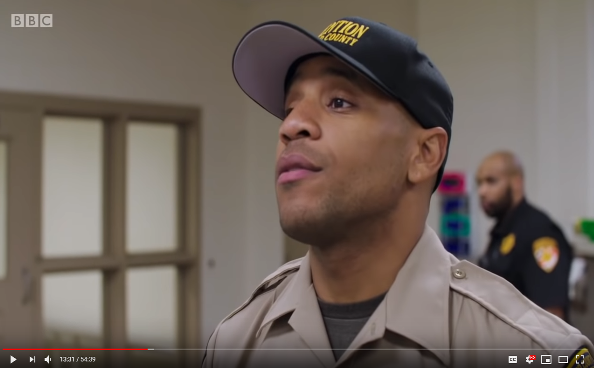 Like with my Diary Room sequences and the rest of the documentary, these interviews will be shot with neither person looking directly at the camera. A good reference for the style I will use when conducting interviews with other people is Reggie Yates when he visits a prison. These interviews are shot with two handheld cameras, one on a two-shot and one getting a close up of either Reggie or the other person in the interview.
The reason why these interview sections are so effective is that both people are in a natural environment and both actually doing something. As they are both working the job of a prison officer, they are making the scene more interesting, rather than a sit down staged interview between two people which may mean sense of character and honesty are lost.
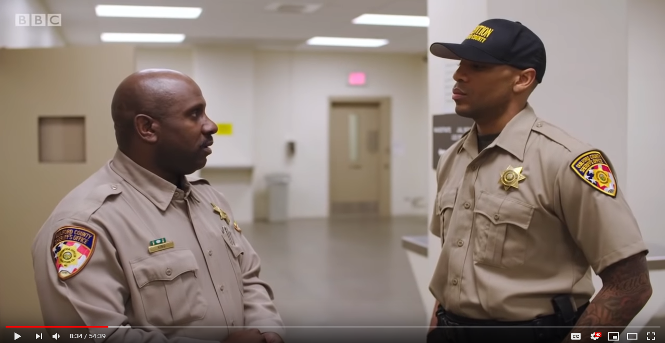 The use of two cameras, which are both handheld, is very effective as it allows the camera operator to have control if the contributor moves slightly or they need to zoom in to get a specific reaction. If this interview were set in a style similar to the Diary room I have been speaking about, it would also create a very different tone to the one used to good effect here. We definitely want these interviews to feel less staged than the Diary room and we will accomplish this by setting these sequences in locations where they would naturally happen.
An example of an interview we hope to have in our documentary is with a disabled motorsport driver, Billy Monger is our intended interviewee. For an interview section with him, we would ideally meet him at a race track and then speak to him while he is in the garage or observing some cars going around the track. Much like the Diary room, we intend to be eavesdropping on the conversation through the use of a camera. I intend to have a two-camera setup. One as a wide shot with both people in the shot and the other capturing a close up of each person, switching between us as we speak. Both of these cameras will be handheld and the lighting will be natural. Before shooting it will be very important to check how the shadows may appear, as this will be staged in regards to us choosing where is best to film and use the natural light accordingly.
Reference Material: https://youtu.be/Cq25Lq42N7A?t=512
Actuality Sequences -
There will be sequences in the documentary where I will just be going about my everyday life and we want to capture some of those moments in our documentary. An example of this is when my Motorsport helmet arrives in the post, we want to capture my emotions as I see the design for the first time. Good reference material for sequences like these are in Driven: The Billy Monger Story. This documentary allowed me to understand this genre really well and the fact that the subject matter is similar to mine also allows me to draw even more similarities.
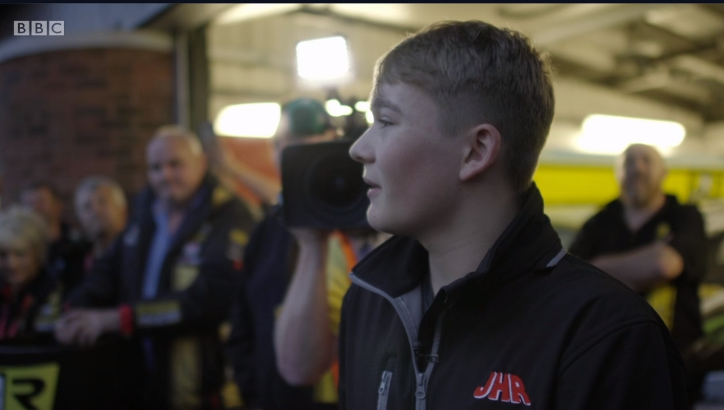 In this show, there are many sequences of Billy just going about his everyday routine and what makes them interesting is the use of the camera. There is a singular handheld camera which just follows Billy around and observes him as he shows the viewer the limitations after his accident. While I am not showing any sort of issue, the use of this style of shot can be used to show a very honest and real look into someone's life.
For these sequences, the camera will follow me around and generally keep to a wide angle to be sure that it does not miss anything. However, if there ever comes a moment where the action stops, the camera operator will have the freedom to do what he feels gives the most impact. This could include zooming in and capturing the emotion of the scene or continuing to film if I break for a moment of contemplation. Whatever shot will evoke the most emotion in the viewer in a certain situation, is what the camera operator must capture. There will be no script or plan about what they should film, but they should ensure the shot type tells our story in the best way possible. Important communication with the crew will allow me to express the importance of this intuition of deciding what shot works best in the spur of the moment.
For the majority of the PTC, Actuality sequences and driving shots we will be using the Sony AX53 because of its superior Auto Focus (which will be vital when the camera, operator and contributor are all moving) and optical image stabilisation inbuilt in the lens. This high-tech piece of equipment produces some really incredible shots. It allows movement in all types of sequences to be less jarring as the lens is actually moving to help stabilise the image. We know that it will not be silky-smooth but we want there to be some movement otherwise the scene feels too artificial and edited.
Reference Material: https://www.bbc.co.uk/iplayer/episode/p06qx4gt/driven-the-billy-monger-story
Establishing Shots -
Each scene needs an astonishing establishing shot to help set the scene, while also showing the viewer we have been paying careful attention to the cinematography used in this documentary.
When I watch documentaries, the shots that are used to open a scene are always very powerful in setting the tone for what lies ahead. We know that motorsport is a grand sport and we want to highlight that importance throughout, through the use of these establishing shots.


I have tried myself to think of shots that would be iconic when starting specific scenes. One I thought of right away was the driving license scene. When arriving at Brands Hatch, a shot that would really capture the attention of the viewer is a shot of the car driving under the large Brands Hatch sing on the entrance. To make this scene feel even more epic, we would make it look as if the car is small in the shot and the sign is large. This helps to play on the significance of the scene and shows that this is a major part of the documentary.
To film this scene, I can see us using the Panasonic DVX 200 on a low tripod which is angled slightly towards the sky to make the car look even smaller in the shot. The use of the trees and the wide open sky will allow this establishing shot to really ensure the viewer is paying attention. We will see the car driving into the venue with the natural ambience of the track in the background. This will then continue later into the scene as we have a camera in the car looking up at me from the passenger seat. This will be a moment of relative silence in the film, as we are trying to show the nerves that I will be going through, just before I take my test.
Driving Shots -
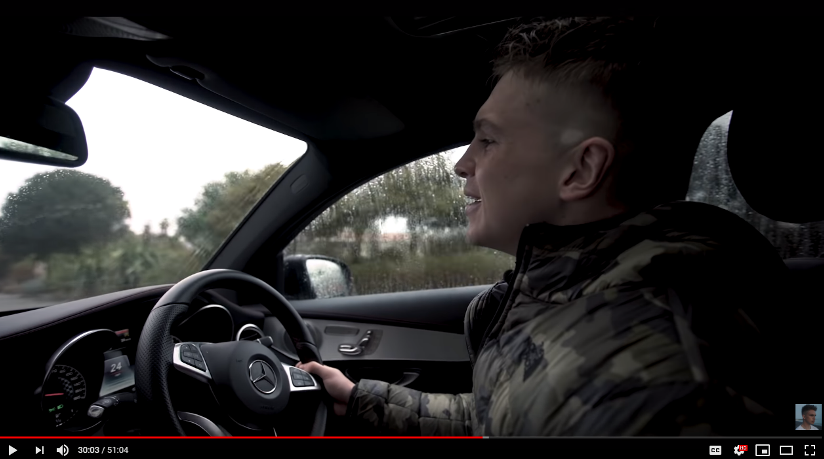 Shots of a person driving in a documentary seem to be very powerful, as it allows the viewer to see the contributor in a natural situation, just airing their thoughts. A really good use of car shots is in the Joe Weller Fighter documentary. He uses car shots to indirectly speak to the viewers about the situation and what he is feeling. These are filmed very much as if you are the person in the passenger seat, speaking to him about the situation. These shots are powerful because they allow the contributor a form of escape from other scenes in the documentary which will have been set up beforehand (interviews, scenarios and challenges) and allows them to be as honest with the camera as they can possibly be.
I think these scenes are the most natural we will film in our documentary. While the Diary room sequences and actuality sequences will allow me to air my thoughts, as can be seen in the Joe Weller documentary, car scenes often allow the contributor to open up on another level. To ensure we capture these scenes, we will need the use of a wide angle lens. Thankfully, the Sony AX53 I previously mentioned has a wide angle, meaning we can achieve a similar style and shot type to the one used in the Joe Weller documentary. Natural lighting will also be key in these scenes, even if we are driving at night, the use of any sort of artificial camera lights would change the tone of these sections and end up being more staged, like our diary room sequences.
Driving shots do allow a non-constructed view in the mind of the presenter that would be hard to replicate anywhere else. They will also be really useful in transitioning between scenes and allowing the viewer to see the progression of the presenter from one moment to the other. While our diary room sequences are looking to the past, these car sequences will be looking at the present and the future, this allows us to show the whole scope of this story.
You can see we are mixing between the highly cinematic scenes of the race, Diary room and establishing shots, with the nitty-gritty raw scenes which are mostly a form of actuality sequences. The combination of the two will allow us to have both a very honest and emotional story while building drama and tension through other ways, such as the sense of speed while racing and the drama of a key-lit room.
Reference Material: https://www.youtube.com/watch?v=S97vorMfyDo
Moments of Reflection & Reaction -
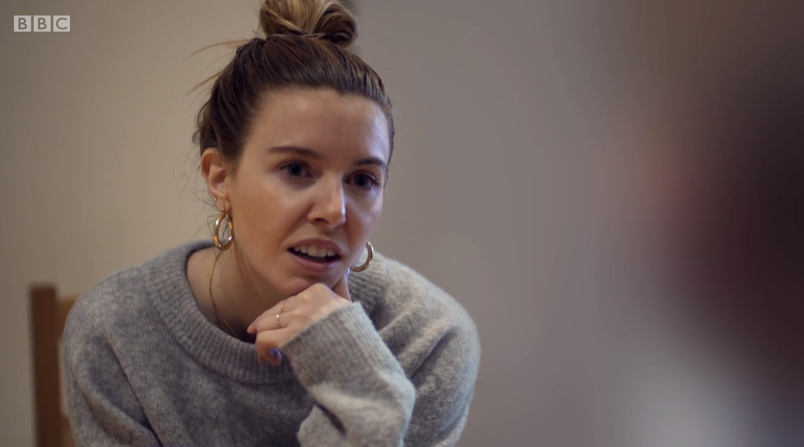 It will be so important to have moments of pause and reflection in our documentary, otherwise, we will be jumping all over the place with so many different emotions and feelings. A documentary that uses the power of silence is “Stacey Dooley Investigates: Shot by my neighbour”.
Stacey is a very experienced presenter who involves herself within a subject matter. Her moments of pause, especially in an interview, allow the viewer to connect with her emotions. Silence is very powerful, especially when it lasts for a comfortable amount of time. This long length in time is allowing the viewer to comprehend what is happening and what their opinions are. Without these moments, both the viewer and the presenter have no time to reflect, as the project is moving so fast.
While the general pacing of my documentary will be fast because of the subject matter and how many things need to be shown, the moments of reflection, contemplation and understanding allow the rest of the documentary to have meaning. This is definitely something I am going to have to learn fast as a contributor and a director as I may struggle at first to know when is a good time to have a pause. But saying this, I should be able to understand the majority of moments where I need to have a moment when I know what I want to say.
These moments will pop up throughout our documentary as we are constantly trying to show what this means to the presenter and at the same time, show the importance of taking the subject matter seriously. I am confident in my abilities as a contributor/presenter in guiding the story along and allowing moments of pause. I am under no illusion that it will not be perfect straight away, but I will quickly learn what I need to be doing as a presenter to ensure the tone is consistent throughout.
Reference material: https://www.bbc.co.uk/iplayer/episode/p06jy0dl/stacey-dooley-investigates-shot-by-my-neighbour
The Race day -
The main race day is going to have a contrast of highly planned shots and actuality sequences like we have previously mentioned. A great example of a documentary that has done something similar is “Sir Chris Hoy - 200mph at Le Mans”. When speaking in the pit garage and motorhome, the handheld camera is used to follow key members and allow them to voice their opinion, but the shots are not particularly beautiful and are just a mid shot of the person speaking to the producer off-screen. These moments are contrasted with the speed and sound of the race through the use of onboard shots and trackside cameras which show a high sense of speed and drama. I would have actually improves this documentary by having a number of cameras from the team out on the track, capturing even more intense shots. This documentary used footage from the TV which still showed a sense of speed, but the shots were still quite wide. I want to have some shot which is closer to the action so we will have a few cameras capturing close-ups and ultra close-ups, while others will capture the generic mid and wide shots. 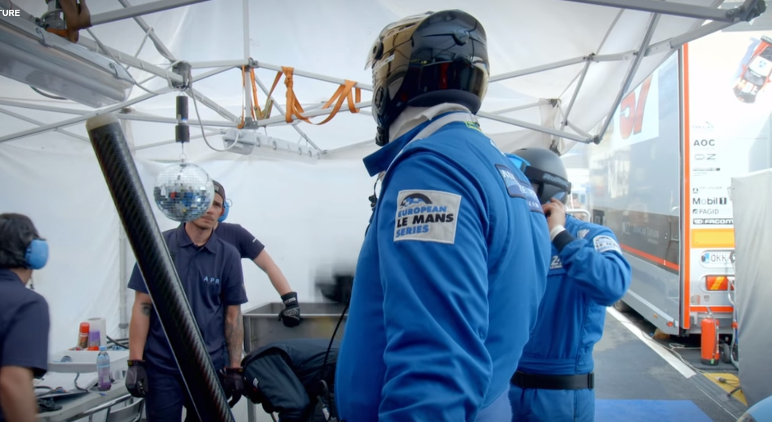
We will have a variety of equipment at our disposal for this sequence and extra camera operators. We will have a total of 5 camera operators and 5 cameras all with different capabilities. Upon testing via test shoots, we will understand which camera is best used in specific areas of the track. We have decided that from experience, however, the SONY AX53 will be used to capture clips in the pit garage, including soundbites from the team, as it has the most stable lens.
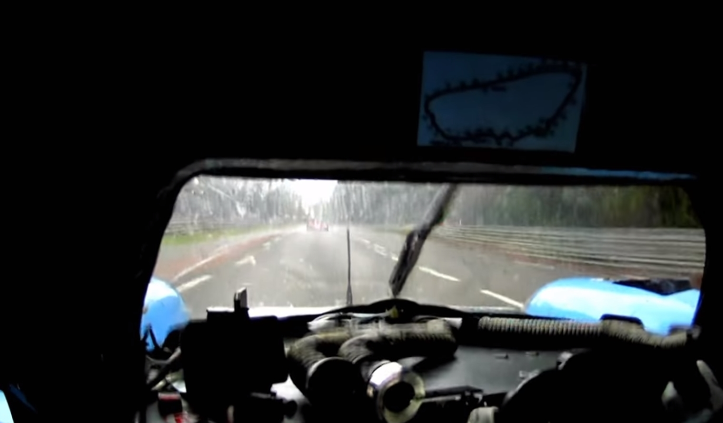
Reference Material: https://vimeo.com/188152852
The mix between highly scripted shots and unscripted shots will allow the viewer to see both sides of the motorsport race. The highly scripted shots will allow the sense of speed through well-crafted shots and great use of action cameras onboard the car. The unscripted shots will be just as important in capturing the task of racing and how hard it really is. Mixed together these will create a very meaningful sequence, hopefully ending in a good result for the team!
Thursday, 1 November 2018
Pre Production - Project Evolution OCTOBER
October was an important month for my project as many things started to change. It was really starting to move forward and I was evolving the project into something special. These monthly blogs are to show what I did overall in each month, further detail can be seen in my other individual blogs.
Changing the story - documentary about chasing dreams
After a lot of consideration and feedback, I decided to change the theme of the project from one about motorsport to one about chasing your dreams. My subject matter would still be motorsport but changing the overall theme would allow me to have a deeper narrative. By stripping back the "mechanical" features of motorsport, it would enable me to focus on the reason as to why I want to achieve this goal. The most interesting part is me as a contributor so I need to capitalise on that an take the viewer deeper into my emotions and history with the sport.
So through changing the angle and story we have stripped back the mechanical sequences and replaced them with more meaningful sequences. I have included more sequences in the diary room and taken the viewer back to multiple meaningful moments in my past to prove why motorsport is so important to me. These sequences will allow the viewer to get to know me better and will also heighten the drama when obstacles such as the racing license need to be completed. These sequences then have more meaning as there is more backstory. Finally, the last race will still be the epic finale that we had always planned, but it will mean a lot more and we will understand all of the emotions because of the backstory that will now be provided with the changes I have made.
Feedback from the group about my reference material
I got some great feedback from the group about my project and I was happy that my initial idea was received well. I changed soon after the presentation to the idea of chasing dreams, but the feedback was still helpful. For example, I had focussed on a couple of roles that were not what a director should be doing. I should not have been speaking so much about the budget as much and things like locations should be George's job as well. I did need to do some research into these areas because they are important for me to develop the script, but maybe I was putting too much time into them which is the time I could have been spending on my roles as director, scriptwriter and presenter.
Overall I had some nice comments about the project from the group and everyone seemed to see it as a plausible project and one that could go forward, and it did get the green light from Simon. I liked the fact that everyone saw my passion for the project as I know that is important when pitching an idea to anyone. I also got given a few things to follow up on regarding the story which was changed when I switched my idea from a motorsport documentary to one about chasing dreams.
Camera tests
I did multiple camera tests and location scouts in October, all of which proved very useful to my understanding of what camera we should use. I scouted and filmed on these locations.
Understanding the costs
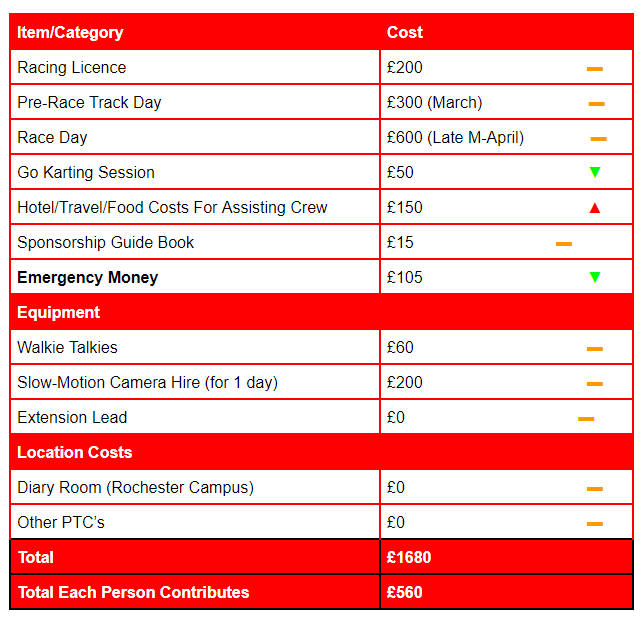
I knew after my meetings with Simon and feedback from the group that I should not be focusing on the budget but I will highlight the progress here as it is work not to be done solely by the director/writer. I worked with George a lot over this budget and we finally got all the numbers together so we can fully understand the costs. My original budget of £1200 did not include a few things so I made sure everyone was aware of that in the presentation. After that, I sat down with George and helped him with the budget. He did not know the costs of the majority of items as he was not focusing on this in pre-production. His help was appreciated though and we got to a number of just under £1700 which still fits within out individual budget of £600 each. You can see the full details below, this budget does include emergency money in case we had forgotten something or something increases in price.
Feedback from Simon through meetings
Through October Simon really helped me with the evolution of the project which enabled me to slightly change the idea into one that would be better received by a wider audience. The idea of chasing dreams. Once I had wrapped my head around what needed to change I got to work and I am now happy with the story that the documentary will tell. As with all the items mentioned here, further detail can be seen in my individual blogs.
Simon also helped me decided what I needed to do for Pre Production as originally I had included things like locations and budget as well as storyboards. All of those would not need to be included as they are jobs for the producer and DOP.
At this moment in time, it looks like these will be the areas I will focus on. Subject to change with meetings with Simon.
Understanding my directorial approach
As can be seen in my other blog posts, I have worked hard on deciding my approach as a director. You can see I have spent a lot of time doing work on analysing directors decisions and why those made an effect on the viewer. My other blogs will show in much better detail what I am going for, but I am looking for "raw" scenes where I will explain to the viewer, through the producer asking questions, what is going on and how I am feeling. At the same time, I want a mix of highly stylistic shots and ones that has an impact on the viewer. The type of shots I am after can be seen in my visual style blog post.
Overall a lot of progress has been made and I am really happy that the project has changed into one that can be recieved by a wider audience, that was my main worry when first pitching my idea. A lot of work is still to be done and the scripting will start in November, along with the Website creation, but I am proud of the progress I have made so far and am looking forward to seeing what happens next!
Changing the story - documentary about chasing dreams
After a lot of consideration and feedback, I decided to change the theme of the project from one about motorsport to one about chasing your dreams. My subject matter would still be motorsport but changing the overall theme would allow me to have a deeper narrative. By stripping back the "mechanical" features of motorsport, it would enable me to focus on the reason as to why I want to achieve this goal. The most interesting part is me as a contributor so I need to capitalise on that an take the viewer deeper into my emotions and history with the sport.
So through changing the angle and story we have stripped back the mechanical sequences and replaced them with more meaningful sequences. I have included more sequences in the diary room and taken the viewer back to multiple meaningful moments in my past to prove why motorsport is so important to me. These sequences will allow the viewer to get to know me better and will also heighten the drama when obstacles such as the racing license need to be completed. These sequences then have more meaning as there is more backstory. Finally, the last race will still be the epic finale that we had always planned, but it will mean a lot more and we will understand all of the emotions because of the backstory that will now be provided with the changes I have made.
Feedback from the group about my reference material
I got some great feedback from the group about my project and I was happy that my initial idea was received well. I changed soon after the presentation to the idea of chasing dreams, but the feedback was still helpful. For example, I had focussed on a couple of roles that were not what a director should be doing. I should not have been speaking so much about the budget as much and things like locations should be George's job as well. I did need to do some research into these areas because they are important for me to develop the script, but maybe I was putting too much time into them which is the time I could have been spending on my roles as director, scriptwriter and presenter.
Overall I had some nice comments about the project from the group and everyone seemed to see it as a plausible project and one that could go forward, and it did get the green light from Simon. I liked the fact that everyone saw my passion for the project as I know that is important when pitching an idea to anyone. I also got given a few things to follow up on regarding the story which was changed when I switched my idea from a motorsport documentary to one about chasing dreams.
Camera tests
I did multiple camera tests and location scouts in October, all of which proved very useful to my understanding of what camera we should use. I scouted and filmed on these locations.
- Filching Manor Kart Track
- Bayford Meadows Kart Track
- Brands Hatch Motorsport Track
- Donnington Park Motorsport Track
We still have yet to finalise the details of where the final race will be held but we assume it will be at Donnington as that is where all of the past years have held a race in March. I went there on a very wet and cloudy day so it was not the greatest for a scout and test, but I managed to get some understanding of where we could film.
After attending all the other camera tests I got a good idea about what camera would be needed for each location. We would use the Sony handheld in the pitlane due to its superior image stabilisation. Cailan's Panasonic would be best utilised on the corner that is furthest from the track due to its long zoom. My Panasonic and the Uni's Panasonic were comparable in terms of image quality and zoom but would not be well utilised unless they were pretty close to the track as their zoom length is not great. We will gather more information and feedback once we get to January and scout all locations again and do more camera tests.
Understanding the costs
I knew after my meetings with Simon and feedback from the group that I should not be focusing on the budget but I will highlight the progress here as it is work not to be done solely by the director/writer. I worked with George a lot over this budget and we finally got all the numbers together so we can fully understand the costs. My original budget of £1200 did not include a few things so I made sure everyone was aware of that in the presentation. After that, I sat down with George and helped him with the budget. He did not know the costs of the majority of items as he was not focusing on this in pre-production. His help was appreciated though and we got to a number of just under £1700 which still fits within out individual budget of £600 each. You can see the full details below, this budget does include emergency money in case we had forgotten something or something increases in price.
Feedback from Simon through meetings
Through October Simon really helped me with the evolution of the project which enabled me to slightly change the idea into one that would be better received by a wider audience. The idea of chasing dreams. Once I had wrapped my head around what needed to change I got to work and I am now happy with the story that the documentary will tell. As with all the items mentioned here, further detail can be seen in my individual blogs.
Simon also helped me decided what I needed to do for Pre Production as originally I had included things like locations and budget as well as storyboards. All of those would not need to be included as they are jobs for the producer and DOP.
At this moment in time, it looks like these will be the areas I will focus on. Subject to change with meetings with Simon.
- The tagline, Title and 25-word pitch
- The overall idea
- Timeline of events
- Properly formatted documentary script
- Information on the broadcast, its platform and it's audience
- My inspiration
- A directors statement
Understanding my directorial approach
As can be seen in my other blog posts, I have worked hard on deciding my approach as a director. You can see I have spent a lot of time doing work on analysing directors decisions and why those made an effect on the viewer. My other blogs will show in much better detail what I am going for, but I am looking for "raw" scenes where I will explain to the viewer, through the producer asking questions, what is going on and how I am feeling. At the same time, I want a mix of highly stylistic shots and ones that has an impact on the viewer. The type of shots I am after can be seen in my visual style blog post.
Overall a lot of progress has been made and I am really happy that the project has changed into one that can be recieved by a wider audience, that was my main worry when first pitching my idea. A lot of work is still to be done and the scripting will start in November, along with the Website creation, but I am proud of the progress I have made so far and am looking forward to seeing what happens next!
Thursday, 25 October 2018
Pre Production - Location Scout & Camera Test - Wednesday 24th October (Brands Hatch & Buckmore Park)
Today the group that will come together in January (Myself, George N & Cailan C) did a location scout and camera test at the motorsport track, Brands Hatch and the Karting track Buckmore Park.
Both are based in Kent and both around 20 Minutes from the Maidstone Studios. George did a great job to set up this day, as he felt it would be very important for the Major Project Group to keep up to date, even when completing our different pre-production projects.
George had created a schedule which had us leaving his house at 11am and returning from Buckmore Park (our last location) at 6pm to get back to George's around 6:30PM. Unfortunately, we started around half an hour late because Cailan was late in arriving at George's. This meant we were on the back foot originally as we knew we had to be at the Kart track for around 4PM. As soon as Cailan arrived, we left for Brands Hatch.
Brands Hatch Location Recce
I had been to Brands Hatch a lot since the age of 8 so I know the track inside out. However, as a fan, you do not always think about the important things needed for creating a video Production.
Transport connections to the track are not great, there is no train nearby and a bus service is not frequent. However, people who are travelling by Public transport can get the Train to Swanley and get the 478 Bus which will stop at the track if you ask the driver. Like Donnington Park that I scouted earlier, the best option is for people travelling by Public Transport is to get a train to the stations near myself or George's house and we can go from there. We will arrange with any crew helping us how they arrive at Brands Hatch if it is used as a location.
Space at the track is not limited. We went there on an open track day which had no spectators, but the only use of this location in our project will be the motor racing license, so it will have no spectators like we saw when recceing the location. The track is very wide and there are no issues with Cameras being in the way of anyway one. For actual use of the camera, there is little issue with filming the track. On track days, I assume you cannot receive trackside access (This will be something George needs to find out) so we will most likely film in locations which are accessible to the general public. We saw today, and I will speak about it more in the camera test section, that there are many great shots that can be created for general access positions. I will talk with Cailan about preferred locations when we know for certain if this location will be used, but wherever we film, space and being in the way will not be an issue at all.
Power Outlets do not seem to be accessible to the general public. I could not see any power outlets, even in the Cafe areas. The garages will have power outlets, like Donnington Park, but we will not be using the pits in this location. We may have to think about changing cameras when at this location, or having multiple batteries as it is unlikely that one battery will last for the whole session/ license day. Power could be a large issue on this location and I will be working with the rest of the team to think of some ways we can solve this issue. This is probably the only issue we may encounter when filming at this location.
Facilities at Brands Hatch are as good as Donnington Park. There are multiple food outlets and toilets positioned all around the track. Apart from if you are walking on the longer part of the track the "GP Loop" where no toilets or food is available. We are unsure yet which version of the circuit will be used as we will only know that once the location if confirmed. However, we will note all of the toilets on a map along with the open food outlets so nobody is left without knowledge of where these facilities are.
Hazards will be present at the track with the cars themselves going around the track. But as the crew will not be trackside at Brands Hatch that will be much less of a hazard than at the track where the actual race will be because at Brands Hatch the crew will be located behind the large metal barriers. In the race, the crew will still be safe behind a safety barrier, but they are not as high because they are designed for photographers to get pictures. On the rest of the track, the crew must be careful as some locations can be slippery underfoot, but this will be the case at every motor racing circuit due to the grassy banks at all motor racing track.
Overall the track is very safe and I am happy with the crew filming here and if I direct the sequences via a script I should be able to get the scenes and sequences I want out of this location with some great shots.
Brands Hatch Camera Test
We put together an edit of the camera test which can be viewed in the video on the right. This shows all of the cameras and at the various locations. It includes PTC and GV Shots mostly, as that is what we will be collecting at Brands Hatch and a Go-Kart track in the future. I will now go into detail about how each camera performed and the pros and cons of each. As Cailan was present, he was able to understand how he may best locate the cameras around the track.
Testing the Zoom:
One thing I wanted to understand from the director's point of view, is which cameras have the longest lens as we can understand where we can maximise that zoom length at a race track. The university Panasonic had the weakest Zoom length, meaning we will mainly use this for Sit down PTC's and at a location at the race track that isn't too far from the track. My Panasonic had a moderate zoom length but still was not good for capturing shots from a far distance. Like the universities camera, it will be located at a place which is not too far from the track, to ensure we still get punchy, zoomed in shots. My Sony and Cailan's Panasonic had the greatest zoom range, meaning we may be able to film at a variety of location as most trackside filming is located far from the track for safety. My Sony has an optical image stabiliser meaning it hyper-smooth even at full-zoom, while Cailan's camera struggles with focusing after it exceeds half-zoom length. Overall we have a good mix of cameras, mixing in the Go Pros and Slow Motion camera, we will have a huge variety of shots for the edit.
Understanding the Colour Grades:
KEY:
PA: Panasonic Alex
PB: Big Panasonic (Uni)
PC: Panasonic Cailan
S: Alex's Sony
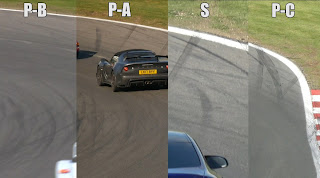 We set all of the cameras to their standard settings so that we could compare the colours and understand which colour-style we should base the project around. Of course, there would still be colour grading in the edit, but if we can match the cameras to our favourite, in-camera grade, that will save time in the edit.
 When I initially observed the footage, I thought PA had the best colour tones as it looked nice and warm, however, upon further inspection, it is almost too warm, having a yellow tint too it. Both PA and PC have inbuilt grading tools that allow you to change the White Balance according to the weather, Sun, Overcast, Indoor etc. I think we can play around with these tools and ensure all the cameras look similar. I think that PC has the most natural colours, but this is not helped by S which was struggling to focus on the cars, as I think we forgot to turn off face tracking so it was not finding anything to focus on. If that is turned off, I think S and PC both have a very similar tone and with a little bit of warmth added, they will look TV Quality.
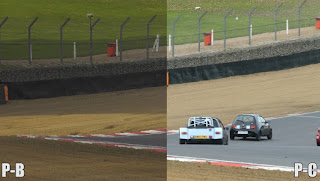 We set up on multiple locations around the track and kept getting a similar result, PC was seemingly the best and most natural tones, but the focusing could have been better. Likewise, with the S, it could have focused better, but it was set to Autofocus where all the rest were on Manual. The PB was fine but it really was shooting washing out footage, we needed more time to "re-learn" the camera after having nearly a year of not using it, but with some small tweaks we could match the colours to PC. As for the focusing of PB, that is more down to practice and we did not have a lot of time as George had us on a tight schedule.

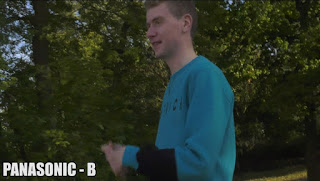 After doing some comparison tests of the cameras, we decided to practice the PTC's and decide which camera we should use for that. Due to native frame rates, we had narrowed the cameras down to S and PB for the PTC shots as they had slightly higher rates meaning footage was less likely to be blurred in movements. We started with PB and Cailan was really struggling to walk and focus the camera at the same time. When we reviewed the footage, we realised that the camera also really struggles to maintain a steady picture while walking on rough terrain. The footage was shaky and it was consistently messing with the framing, my head sometimes is a long way outside the COF. We decided to see how the S did. With its optical image stabilisation and incredible autofocus with faces, it provided us with a much smoother shot. It was not as "perfect" as a stabilised image, but we did not want that, as this will be an actuality sequence. Movement is still needed to make these scenes feel natural. Too much stabilisation would kill the tone and that is something we are very conscious of. The S was much better in all areas, video quality, focus and ease of use as it is much smaller and lighter than the PB. We decided going forward we would use this camera for the PTC's as it was superior to the rest of the equipment we had.
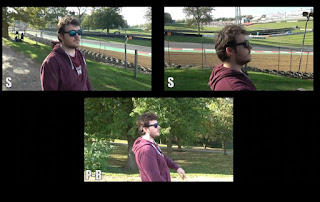 We also played around with the camera angles to see which would work best when walking. Being slightly ahead of the presenter when they are walking looks best and also helps reduce shadows. It also looks better because it is slightly zoomed out, rather than being a close up like Cailan was trying to create when I was walking. I took the control of the camera so that I could understand what this scene was like to film, as well as understanding what shot type worked best. I am glad I did this because I need to decide the shot types for the script, and I need that hands-on experience to ensure I have tried what I think looks good in my mind.
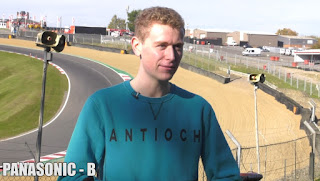 We also tried some static PTC's but these felt really staged and the lack of movement really killed any sort of emotion that we would have built up to by this stage. It also made me look like a presenter, rather than a contributor which meant we decided to not follow this route any further. We quickly realised that we want the majority of this film to be handheld and have constant movement to keep the pace up. We may go static for a couple of hard-hitting scenes, but the majority would include some sort of movement. The static PTC's were easier for Cailan, but he agreed, he wants to challenge himself and try shots that will create the best cinematic effect. Therefore, going forward we decided we should use the S, handheld and be moving when doing a PTC.
We learnt a lot at Brands Hatch and it was great to come together, even though we are working on separate projects for PP, as it enabled us to get in the spirit of the production and have something to look forward to! We all settled nicely into our roles and were helping each other in this very early phase of the production. We also understood that the wireless clip mic would best for the PTC's. The boom mic would be fine as a backup, but the quality of the clip mic is superior. We will accompany this with Tascam when not using the PB that has a Microphone slot appropriate.
Buckmore Park Location Recce
We were not going to Buckmore Park as a possible filming location, rather just giving the crew an opportunity to practice filming Go Karts as they had not done that either. Buckmore Park will not be the track we use as I have never been there and it has no meaning to the story. However, it was worth looking around the location just in case we ever did come here to film.
Transport connections were good for car drivers as it is located just off the M2 Motorway, but no train station was close to the track. The facilities were great with there being a central hub where food, toilets and areas to sit were located. Power outlets were also available in the central hub which would give the crew an opportunity to charge equipment if it was needed. As Go Karting is still a form of motorsport, hazards do present themselves with the possibility of a kart losing control. There are safety barriers located around the track that we were told to stay behind. The area was tarmacked meaning loss of footing was not an issue unless there was rain. Space was limited but the employee at the track said we were not in anyone's way, wherever we filmed which was good to hear as we were worried at first that the location was rather limited in terms of space. Overall the location was safe to film at and gave some good shots which I will speak about in the camera test section. This part of the day was only really meant to practice filming Go Karts as we will have a scene in our documentary which includes me in a Kart. However, it is worth knowing that this track has a lot of positive features for filming which we can take into consideration for future events.
Buckmore Park Camera Test
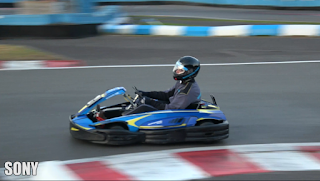 We went to Buckmore mostly to give us a chance to understand how best to film a moving object. We did do a little bit of panning at Brands Hatch, but that was more about comparing the cameras.
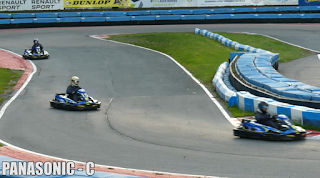 At Buckmore we spent around an hour on three separate cameras, trying out shots and trying to be unique and original, trying to create a shot that looked like it was intense or was action-packed. I used my Sony, Cailan his Panasonic and George had the big Uni Panasonic. We all moved around the track and I helped as much as possible as I had done a lot of motorsport filming in the past. The most difficult part is definitely judging the speed of the pan and ensuring you do not go too fast and create a blur or miss the vehicle with bad framing.
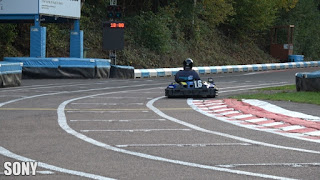 A mix of handheld pans along with some fixed tripod shots will enable us to create an intense sequence. They need to be accompanied by each other otherwise the sequence will be all over the place and no "down time". One sequence cannot be constant action, to appreciate the action we need to be brought further out and have a moment of stillness and silence. If everything is fast paced and full of action, it does not give the perspective of speed in the action sequence.
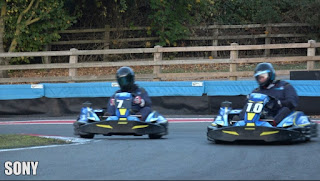 Something that is important in motorsport videography is using the iconography of the track to create an interesting shot. For example, you can see the shots I took on the sony use the lines on the track, to create a cinematic effect which draws the viewer in. You can see on Cailan's shots that he is not exactly sure what to film or what angle is best, which is fine as it is a learning experience and I have been able to point this out to him. You have to see where the karts are driving, to understand the racing lines and track perimeter including iconography to create a shot which looks visually pleasing.
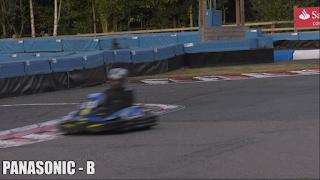 Overall the shots we a good start. They helped us have a chance at panning and using a tripod and understanding how is best to film a kart. I need to make sure that it is made clear in the script for them, that we want to create a sequence that is intense and action-filled. We need punchy shots with close-ups and ultra close-ups. These are hard shots to create, but with some experience and at our level we should all be able to create them. It was a long day, but a lot was learned and it was important to keep in tough in PP while we are working on our separate projects.

Both are based in Kent and both around 20 Minutes from the Maidstone Studios. George did a great job to set up this day, as he felt it would be very important for the Major Project Group to keep up to date, even when completing our different pre-production projects.
George had created a schedule which had us leaving his house at 11am and returning from Buckmore Park (our last location) at 6pm to get back to George's around 6:30PM. Unfortunately, we started around half an hour late because Cailan was late in arriving at George's. This meant we were on the back foot originally as we knew we had to be at the Kart track for around 4PM. As soon as Cailan arrived, we left for Brands Hatch.
Brands Hatch Location Recce
I had been to Brands Hatch a lot since the age of 8 so I know the track inside out. However, as a fan, you do not always think about the important things needed for creating a video Production.
Transport connections to the track are not great, there is no train nearby and a bus service is not frequent. However, people who are travelling by Public transport can get the Train to Swanley and get the 478 Bus which will stop at the track if you ask the driver. Like Donnington Park that I scouted earlier, the best option is for people travelling by Public Transport is to get a train to the stations near myself or George's house and we can go from there. We will arrange with any crew helping us how they arrive at Brands Hatch if it is used as a location.
Space at the track is not limited. We went there on an open track day which had no spectators, but the only use of this location in our project will be the motor racing license, so it will have no spectators like we saw when recceing the location. The track is very wide and there are no issues with Cameras being in the way of anyway one. For actual use of the camera, there is little issue with filming the track. On track days, I assume you cannot receive trackside access (This will be something George needs to find out) so we will most likely film in locations which are accessible to the general public. We saw today, and I will speak about it more in the camera test section, that there are many great shots that can be created for general access positions. I will talk with Cailan about preferred locations when we know for certain if this location will be used, but wherever we film, space and being in the way will not be an issue at all.
Power Outlets do not seem to be accessible to the general public. I could not see any power outlets, even in the Cafe areas. The garages will have power outlets, like Donnington Park, but we will not be using the pits in this location. We may have to think about changing cameras when at this location, or having multiple batteries as it is unlikely that one battery will last for the whole session/ license day. Power could be a large issue on this location and I will be working with the rest of the team to think of some ways we can solve this issue. This is probably the only issue we may encounter when filming at this location.
Facilities at Brands Hatch are as good as Donnington Park. There are multiple food outlets and toilets positioned all around the track. Apart from if you are walking on the longer part of the track the "GP Loop" where no toilets or food is available. We are unsure yet which version of the circuit will be used as we will only know that once the location if confirmed. However, we will note all of the toilets on a map along with the open food outlets so nobody is left without knowledge of where these facilities are.
Hazards will be present at the track with the cars themselves going around the track. But as the crew will not be trackside at Brands Hatch that will be much less of a hazard than at the track where the actual race will be because at Brands Hatch the crew will be located behind the large metal barriers. In the race, the crew will still be safe behind a safety barrier, but they are not as high because they are designed for photographers to get pictures. On the rest of the track, the crew must be careful as some locations can be slippery underfoot, but this will be the case at every motor racing circuit due to the grassy banks at all motor racing track.
Brands Hatch Camera Test
We put together an edit of the camera test which can be viewed in the video on the right. This shows all of the cameras and at the various locations. It includes PTC and GV Shots mostly, as that is what we will be collecting at Brands Hatch and a Go-Kart track in the future. I will now go into detail about how each camera performed and the pros and cons of each. As Cailan was present, he was able to understand how he may best locate the cameras around the track.
Testing the Zoom:
One thing I wanted to understand from the director's point of view, is which cameras have the longest lens as we can understand where we can maximise that zoom length at a race track. The university Panasonic had the weakest Zoom length, meaning we will mainly use this for Sit down PTC's and at a location at the race track that isn't too far from the track. My Panasonic had a moderate zoom length but still was not good for capturing shots from a far distance. Like the universities camera, it will be located at a place which is not too far from the track, to ensure we still get punchy, zoomed in shots. My Sony and Cailan's Panasonic had the greatest zoom range, meaning we may be able to film at a variety of location as most trackside filming is located far from the track for safety. My Sony has an optical image stabiliser meaning it hyper-smooth even at full-zoom, while Cailan's camera struggles with focusing after it exceeds half-zoom length. Overall we have a good mix of cameras, mixing in the Go Pros and Slow Motion camera, we will have a huge variety of shots for the edit.
Understanding the Colour Grades:
KEY:
PA: Panasonic Alex
PB: Big Panasonic (Uni)
PC: Panasonic Cailan
S: Alex's Sony
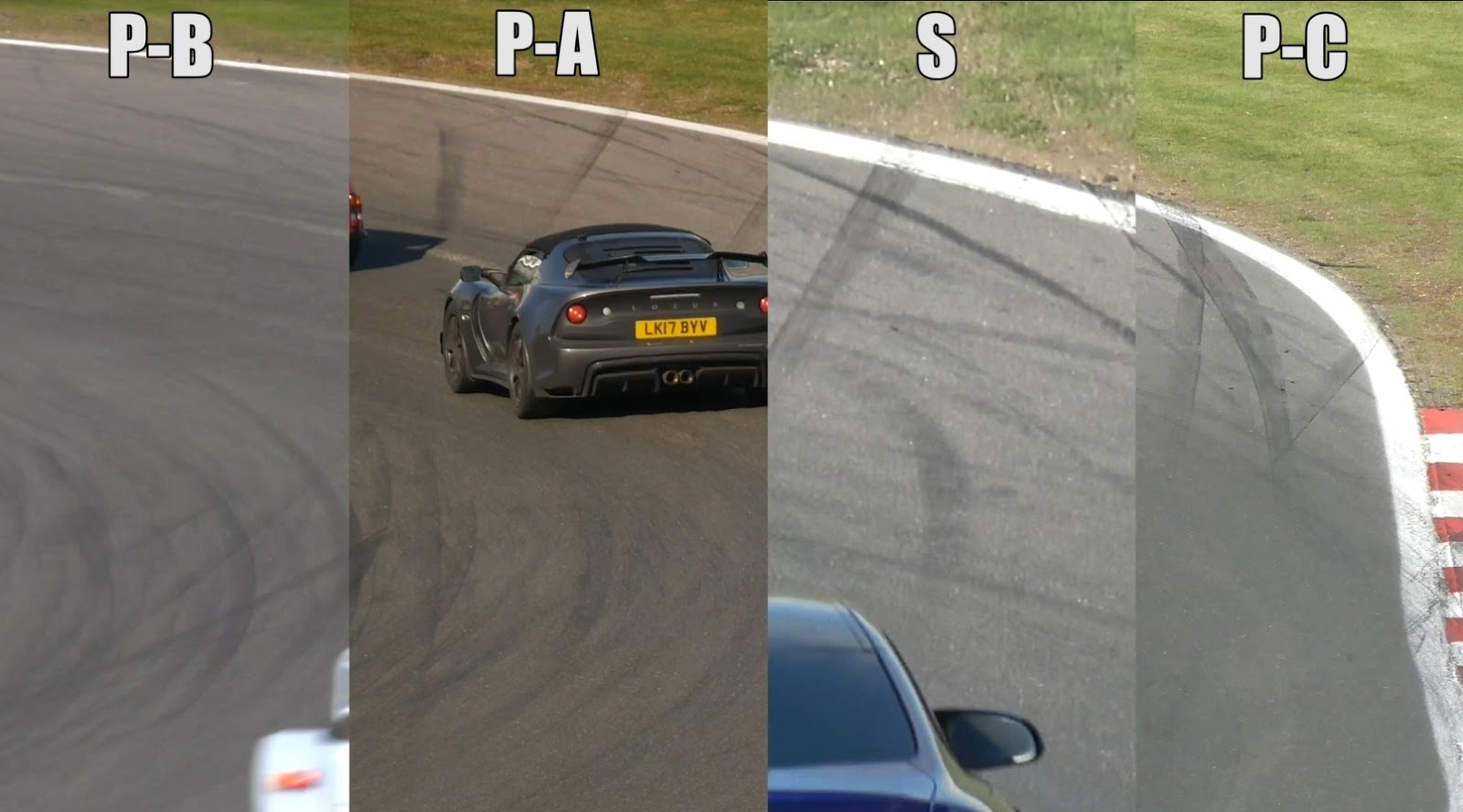 We set all of the cameras to their standard settings so that we could compare the colours and understand which colour-style we should base the project around. Of course, there would still be colour grading in the edit, but if we can match the cameras to our favourite, in-camera grade, that will save time in the edit.

 We set up on multiple locations around the track and kept getting a similar result, PC was seemingly the best and most natural tones, but the focusing could have been better. Likewise, with the S, it could have focused better, but it was set to Autofocus where all the rest were on Manual. The PB was fine but it really was shooting washing out footage, we needed more time to "re-learn" the camera after having nearly a year of not using it, but with some small tweaks we could match the colours to PC. As for the focusing of PB, that is more down to practice and we did not have a lot of time as George had us on a tight schedule.

 After doing some comparison tests of the cameras, we decided to practice the PTC's and decide which camera we should use for that. Due to native frame rates, we had narrowed the cameras down to S and PB for the PTC shots as they had slightly higher rates meaning footage was less likely to be blurred in movements. We started with PB and Cailan was really struggling to walk and focus the camera at the same time. When we reviewed the footage, we realised that the camera also really struggles to maintain a steady picture while walking on rough terrain. The footage was shaky and it was consistently messing with the framing, my head sometimes is a long way outside the COF. We decided to see how the S did. With its optical image stabilisation and incredible autofocus with faces, it provided us with a much smoother shot. It was not as "perfect" as a stabilised image, but we did not want that, as this will be an actuality sequence. Movement is still needed to make these scenes feel natural. Too much stabilisation would kill the tone and that is something we are very conscious of. The S was much better in all areas, video quality, focus and ease of use as it is much smaller and lighter than the PB. We decided going forward we would use this camera for the PTC's as it was superior to the rest of the equipment we had.
 We also played around with the camera angles to see which would work best when walking. Being slightly ahead of the presenter when they are walking looks best and also helps reduce shadows. It also looks better because it is slightly zoomed out, rather than being a close up like Cailan was trying to create when I was walking. I took the control of the camera so that I could understand what this scene was like to film, as well as understanding what shot type worked best. I am glad I did this because I need to decide the shot types for the script, and I need that hands-on experience to ensure I have tried what I think looks good in my mind.
 We also tried some static PTC's but these felt really staged and the lack of movement really killed any sort of emotion that we would have built up to by this stage. It also made me look like a presenter, rather than a contributor which meant we decided to not follow this route any further. We quickly realised that we want the majority of this film to be handheld and have constant movement to keep the pace up. We may go static for a couple of hard-hitting scenes, but the majority would include some sort of movement. The static PTC's were easier for Cailan, but he agreed, he wants to challenge himself and try shots that will create the best cinematic effect. Therefore, going forward we decided we should use the S, handheld and be moving when doing a PTC.
We learnt a lot at Brands Hatch and it was great to come together, even though we are working on separate projects for PP, as it enabled us to get in the spirit of the production and have something to look forward to! We all settled nicely into our roles and were helping each other in this very early phase of the production. We also understood that the wireless clip mic would best for the PTC's. The boom mic would be fine as a backup, but the quality of the clip mic is superior. We will accompany this with Tascam when not using the PB that has a Microphone slot appropriate.
Buckmore Park Location Recce
We were not going to Buckmore Park as a possible filming location, rather just giving the crew an opportunity to practice filming Go Karts as they had not done that either. Buckmore Park will not be the track we use as I have never been there and it has no meaning to the story. However, it was worth looking around the location just in case we ever did come here to film.
Transport connections were good for car drivers as it is located just off the M2 Motorway, but no train station was close to the track. The facilities were great with there being a central hub where food, toilets and areas to sit were located. Power outlets were also available in the central hub which would give the crew an opportunity to charge equipment if it was needed. As Go Karting is still a form of motorsport, hazards do present themselves with the possibility of a kart losing control. There are safety barriers located around the track that we were told to stay behind. The area was tarmacked meaning loss of footing was not an issue unless there was rain. Space was limited but the employee at the track said we were not in anyone's way, wherever we filmed which was good to hear as we were worried at first that the location was rather limited in terms of space. Overall the location was safe to film at and gave some good shots which I will speak about in the camera test section. This part of the day was only really meant to practice filming Go Karts as we will have a scene in our documentary which includes me in a Kart. However, it is worth knowing that this track has a lot of positive features for filming which we can take into consideration for future events.
Buckmore Park Camera Test
 We went to Buckmore mostly to give us a chance to understand how best to film a moving object. We did do a little bit of panning at Brands Hatch, but that was more about comparing the cameras.
 At Buckmore we spent around an hour on three separate cameras, trying out shots and trying to be unique and original, trying to create a shot that looked like it was intense or was action-packed. I used my Sony, Cailan his Panasonic and George had the big Uni Panasonic. We all moved around the track and I helped as much as possible as I had done a lot of motorsport filming in the past. The most difficult part is definitely judging the speed of the pan and ensuring you do not go too fast and create a blur or miss the vehicle with bad framing.
 A mix of handheld pans along with some fixed tripod shots will enable us to create an intense sequence. They need to be accompanied by each other otherwise the sequence will be all over the place and no "down time". One sequence cannot be constant action, to appreciate the action we need to be brought further out and have a moment of stillness and silence. If everything is fast paced and full of action, it does not give the perspective of speed in the action sequence.
 Something that is important in motorsport videography is using the iconography of the track to create an interesting shot. For example, you can see the shots I took on the sony use the lines on the track, to create a cinematic effect which draws the viewer in. You can see on Cailan's shots that he is not exactly sure what to film or what angle is best, which is fine as it is a learning experience and I have been able to point this out to him. You have to see where the karts are driving, to understand the racing lines and track perimeter including iconography to create a shot which looks visually pleasing.
 Overall the shots we a good start. They helped us have a chance at panning and using a tripod and understanding how is best to film a kart. I need to make sure that it is made clear in the script for them, that we want to create a sequence that is intense and action-filled. We need punchy shots with close-ups and ultra close-ups. These are hard shots to create, but with some experience and at our level we should all be able to create them. It was a long day, but a lot was learned and it was important to keep in tough in PP while we are working on our separate projects.

Monday, 22 October 2018
Pre Production - BUDGET AND SCHEDULE (As of October 2018)
Before we can start this project we need to know the possible budget for this project could be. Once we know what the documentary should cost to make, we can plan around that. However, we should exercise caution with the budget as there will be additional costs that could arise without us knowing until very close to it happening. I have looked at the cost of the potential sequences that we will have in this documentary and worked out the costs accordingly. This is a rough guide as George, as the producer, will take upon this role full-time in January. However, I feel it is very important to understand all of the costs before I finalise the script so that I do not include too many expensive sequences that we cannot fit into our piece.
Opening Sequences - PTC In studio or Spare campus room. We can obtain access to a university lecture room with a projector or some space in the studio. This will enable us to film the piece to camera segments planned. We will liaise with the university and get this at no cost. We could use a room at the Maidstone studios campus, but we may be tight for space which could compromise quality. As the producer, George will be in charge of finding this location and securing it. The cost for this should be nothing, apart from the travel costs.
Interviews - Throughout the documentary, we will have interviews with race drivers as well as possibly a doctor and family members. The only cost involved here would be getting to the locations and transporting the camera equipment. This is a cost we have all stated we should not include in the budget as we would have been travelling to the university as much anyway, so it would be a similar outlay to before. Worst case scenario, we would be spending £30 per person a day on travel (by car or train) as we would be meeting people rather than paying them to visit us.
Travel for other members of the group - We will be paying for our own travel, but we will need to pay for the travel of people helping us with the project. Assuming they will be local, that cost should not be any more per day than £30. We will only need extra help on the Race day and potentially on the test session a few weeks prior. This should help keep costs down. However, we have allocated at least £100 for other people helping us in this project.
Go Karting - One of our opening sequences will be at a go-kart track, this will be one of the first locations we see on screen. The use of the kart session will be the start of the journey. This is where I am at right now and we will talk about what I think might happen in the future. This cost comes to £30-50 depending on the track. I have some contacts that may allow me to film and have a discount, so that cost will hopefully reduce, which would help our overall costs.
The Racing License - To ensure I can race, I need to obtain a racing license. This will enable me to participate in the race, without it, I cannot race. Including the starter pack and medical, this will cost around £500 and £200 will be funded by the project budget. If we get outside funding through our fundraiser or sponsor this will help cover the gap in cost.
The Trackday - To prepare at the circuit I will be racing in, I will be taking part in half a days track running with my co-driver, Sam. He will help me learn the track and give advice. This will be a big moment in the documentary as it will be the first time I drive the car. This will come to around £300 for half of a track day.
The Race - The main race which will conclude our film will undoubtedly be the most expensive part of the project, but as the climax of the film and the part that will have the most screen time, it will be worth it. To complete half of the race and pay the entry fee it will be £600 all-in.
Recording Equipment - While we in a fortunate position that we have the use of multiple cameras, we still aim to buy a camera between us. This may sound extreme, but as we will be filming a motor race from multiple different angles, we need a lot of cameras. We have 4, including one from the university, but we will need at least one more. We have set a budget of £100 to buy an extra camera. Cailan has already bought a camera and it is shown as the only item which we have all contributed towards and paid for. We have also set aside money for a possible slow motion camera hire, a new Handheld microphone and an extension cable. We are aware other equipment may be needed but as of writing this, we think this is all the equipment we should need.
We may also rent a slow-motion camera for one day/ weekend to capture glorious shots at a high frame rate. I have looked on various websites and we could hire one for £200. This may be a cost we simply cannot afford when we have paid for the rest, but we think this option would enable us to create some very slick shots. This has been allocated to our budget but this will be the first thing to be removed if we are tight on money.
We will buy some walkie-talkies for the shoot days, these will cost £60 for 6 walkie-talkies. I have looked on various websites, including Amazon, I feel like we should buy the walkie-talkies before we recce the locations before the event so we can test that they work!

Schedule
It will be George's job come January to make a proper schedule but I have made a hypothetical plan of when I think we should film, just for my own guideline throughout pre-production. I fully expect this to change and for George to give me a much more developed schedule come the middle on January.
As the narrative is linear, it is important to note that draft cuts can be edited after each segment is completed, which will help in the overall turnaround of this project as the eventual race will be late in our schedule.
While neither of these is finished or will be my responsibility come January, they are vital for me to know for Pre Production. Thankfully George has helped me create this budget and he has created a Google Document to illustrate it. Both having a rough idea of the schedule and the budget will enable the pre-production planning to be easier for me. I will continue contact with George and Cailan to make sure I keep them in the loop about the project alongside their own ideas.
Opening Sequences - PTC In studio or Spare campus room. We can obtain access to a university lecture room with a projector or some space in the studio. This will enable us to film the piece to camera segments planned. We will liaise with the university and get this at no cost. We could use a room at the Maidstone studios campus, but we may be tight for space which could compromise quality. As the producer, George will be in charge of finding this location and securing it. The cost for this should be nothing, apart from the travel costs.
Interviews - Throughout the documentary, we will have interviews with race drivers as well as possibly a doctor and family members. The only cost involved here would be getting to the locations and transporting the camera equipment. This is a cost we have all stated we should not include in the budget as we would have been travelling to the university as much anyway, so it would be a similar outlay to before. Worst case scenario, we would be spending £30 per person a day on travel (by car or train) as we would be meeting people rather than paying them to visit us.
Travel for other members of the group - We will be paying for our own travel, but we will need to pay for the travel of people helping us with the project. Assuming they will be local, that cost should not be any more per day than £30. We will only need extra help on the Race day and potentially on the test session a few weeks prior. This should help keep costs down. However, we have allocated at least £100 for other people helping us in this project.
Go Karting - One of our opening sequences will be at a go-kart track, this will be one of the first locations we see on screen. The use of the kart session will be the start of the journey. This is where I am at right now and we will talk about what I think might happen in the future. This cost comes to £30-50 depending on the track. I have some contacts that may allow me to film and have a discount, so that cost will hopefully reduce, which would help our overall costs.
The Racing License - To ensure I can race, I need to obtain a racing license. This will enable me to participate in the race, without it, I cannot race. Including the starter pack and medical, this will cost around £500 and £200 will be funded by the project budget. If we get outside funding through our fundraiser or sponsor this will help cover the gap in cost.
The Trackday - To prepare at the circuit I will be racing in, I will be taking part in half a days track running with my co-driver, Sam. He will help me learn the track and give advice. This will be a big moment in the documentary as it will be the first time I drive the car. This will come to around £300 for half of a track day.
The Race - The main race which will conclude our film will undoubtedly be the most expensive part of the project, but as the climax of the film and the part that will have the most screen time, it will be worth it. To complete half of the race and pay the entry fee it will be £600 all-in.
Recording Equipment - While we in a fortunate position that we have the use of multiple cameras, we still aim to buy a camera between us. This may sound extreme, but as we will be filming a motor race from multiple different angles, we need a lot of cameras. We have 4, including one from the university, but we will need at least one more. We have set a budget of £100 to buy an extra camera. Cailan has already bought a camera and it is shown as the only item which we have all contributed towards and paid for. We have also set aside money for a possible slow motion camera hire, a new Handheld microphone and an extension cable. We are aware other equipment may be needed but as of writing this, we think this is all the equipment we should need.
We may also rent a slow-motion camera for one day/ weekend to capture glorious shots at a high frame rate. I have looked on various websites and we could hire one for £200. This may be a cost we simply cannot afford when we have paid for the rest, but we think this option would enable us to create some very slick shots. This has been allocated to our budget but this will be the first thing to be removed if we are tight on money.
We will buy some walkie-talkies for the shoot days, these will cost £60 for 6 walkie-talkies. I have looked on various websites, including Amazon, I feel like we should buy the walkie-talkies before we recce the locations before the event so we can test that they work!
We fully expect the budget to fluctuate but as the document is set up clearly, it shows what each person has already put in, and shows how much money they still need to put in towards their individual total which is currently £603.33. You can see we have all contributed some money towards the cost of the camera. Over the coming weeks and months, this will go up and the amount of money each person has put in will change, but we will all come to the eventual figure of £603.33 put in.
It will be George's job come January to make a proper schedule but I have made a hypothetical plan of when I think we should film, just for my own guideline throughout pre-production. I fully expect this to change and for George to give me a much more developed schedule come the middle on January.
As the narrative is linear, it is important to note that draft cuts can be edited after each segment is completed, which will help in the overall turnaround of this project as the eventual race will be late in our schedule.
- January 2019 - What and where we are going to film will have been decided by this point. January will consist of location scouting and Cailan developing the storyboards. We will also be completing camera tests.
- February 2019 - Filming will commence. The opening scenes exploring motorsport in my childhood. We will also be filming the scenes that include Go Karting and obtaining my racing license.
- March 2019 - Majority of filming will be completed by the end of March. This includes moments in my personal journey eg. Fitness & Training, Simulator Sessions and similar actuality experiences. The race that will end the documentary normally happens towards the end of March which gives us time to edit.
- April 2019 - Cailan will transcribe the clips and I will put these clips into a new edit script. We will work as a team to decide the best clips to tell the story. April will also leave us with a slim opportunity to film any extra cover shots or film an additional interview if we feel one is needed.
- May 2019 - George will be given the opportunity to edit and we will constantly feedback with ideas. By the middle of May, our production will be complete.
While neither of these is finished or will be my responsibility come January, they are vital for me to know for Pre Production. Thankfully George has helped me create this budget and he has created a Google Document to illustrate it. Both having a rough idea of the schedule and the budget will enable the pre-production planning to be easier for me. I will continue contact with George and Cailan to make sure I keep them in the loop about the project alongside their own ideas.
Saturday, 20 October 2018
Pre Production - CASE STUDY - Reggie Yates


This opening voiceover is also mixed with a piece to the camera, which allows the viewer to see the presenter for the first time. Reggie explains why this story has a meaning to him (Parents from Ghana and he has visited the county many times in his life) which adds another layer of importance to this documentary. The opening sequence clearly lays out that this is a self-discovery mission and the presenter is doing all he can to enlighten in the viewer through living the situations of the locals.
This opening sequence also tells the viewer why this subject matter is important now. This is because a lot of the goods being burned for copper are coming from Europe, specifically England. As this is for an English TV channel, it makes the subject matter relevant and thought-provoking. We instantly know that the documentary is trying to highlight an issue we probably didn't even know existed. This is done through this powerful opening mix of a voiceover and PTC to draw the viewer into the reality and let them explore the subject through Reggie's actions.

This style of filming was down to a lack of planning, as I have seen a number of Reggie's documentaries and most of them are more cinematic than this particular one. This could have been a chosen style, to highlight the rawness of the issue, but more time should have been spent understanding the location beforehand. It would have been down to the inaccessibility of this location which meant they could not determine what could be filmed until they got there. This rushed approach did change the tone of the documentary, as we were now seeing more shots of the appalling situation, rather than crafted cinematic shots.
This shows the importance of planning and location recce and I am already taking a proactive approach when making my documentary as I have already scouted multiple locations. I am aware that my locations are much more accessible than the one used here, which is probably why they ran into issues as a production team. The importance of doing a location recce has already enabled me to understand the potential hazards of each location we are going to visit. This has allowed me to better understand how we should approach filming our documentary so that our tone is consistent throughout. I am likely to do another location scout with the rest of my group so we can collectively decide what the best approach for each scene is.

Sometimes these changes in camera shot are covered with a general view shot, but we do see the camera actively move to change shot type on multiple occasions. I am not a fan of the constant camera readjustments being shown, as I like a documentary to be slightly more cinematic and clever with its use of the camera. I am not sure if it was intended to be like this, but I assume it was not the plan as many other Reggie Yates Documentaries feel more "complete" with fewer shots which are created in this style. I learnt that in this style of documentary you want to film moments of authenticity, but they need to be done in a way which is easy to follow as a viewer. Constant camera reframing does significantly lower the production value, even if the moments it captures are more authentic. This knowledge has allowed me to analyse my script and predict where moments of emotion and honesty could arise. Pointing these out to the crew will allow one camera to be focused on a typical wide shot, while one captures close-ups of specific emotions. The use of two cameras is used in many other documentaries with this style, as they help create a more refined and visually pleasing documentary.

This goes to show how important some sort of plan is before filming starts. The cast and crew went into creating some scenes of this documentary woefully underprepared which has led to some scenes feeling staged and filmed in an uncreative way. This is a surprise as some scenes are beautifully shot and had a lot of time and thought put into them. It is a shame that didn't stay have a consistent tone throughout this documentary, as that would have allowed the viewers to connect to the story further. This makes me slightly concerned as a director who is also in front of the camera. It certainly makes me think about planning a lot more than originally thought, so that the crew get the shots I'm thinking of and fully understands the cinematic approach that will be consistent throughout the documentary. This has led to me placing further hints at the style of particular scenes in my script. I have also sent reference material to my collogues which will allow them to know my inspiration for each scene.
I still love this documentary as it tells a great story, which is the most important thing, but looking at it as a director I am somewhat disappointed with its production quality. It uses a lot of L Cuts which is a great cinematic technique which allows the viewer to hear the contributor before we see them.
"An L cut is a variant of a split edit film editing technique in which the audio from preceding scene overlaps the picture from the following scene, so that the audio cuts after the picture, and continues playing over the beginning of the next scene."It is a great cinematic effect when used correctly, but in situations throughout this documentary, it felt un-needed and unplanned. This gave the impression that the crew were unprepared and were struggling in the situations because of where the area the documentary was set.

I felt a little disgusted when I saw this, because I thought no human should have to put themselves in this much danger to survive. This is what a shot like this does, it creates a powerful emotion in the viewer. The production did do a good job at points in this documentary to capture those scenes as these are the shots that stick in peoples mind when discussing this topic in the future. I feel like there should have been more shots like this and they were a little too reliant on handheld shots which were set up on the fly and did not have the same impact. The use of iconic shots will be different in my documentary, but they will still be used to have an impact on the viewer. An example of an iconic shot I have chosen after watching this, is one as I enter Brands Hatch to complete my racing license. I am creating this specific scene to have a large impact on the viewer, I will use the large Brands Hatch logos at the circuit entrance to heighten the drama. the camera will be placed low, showing the logos and the sky, enabling my car as I drive in to be small, highlighting the large task I have ahead of me.
 Possibly because of the nature of the topic matter, being put into the shoes of this group of people is very powerful and allows the viewer to connect to the subject matter. As Reggie is subjecting himself to living in conditions no human should, it allows the viewer to sympathise as they are probably more like Reggie than the locals. The locals see this as somewhat normal and do not understand how dangerous the situation is. This means if this documentary was more observational it could lead us as viewers to not feel the same emotions that we do when a presenter is in the situation themselves.
Having a presenter that is partaking in "The Life" also allows the people in the film to be challenged. He always knows when to speak out when something is not right, challenging people, even if he grew a close bond with them. He does it in a very humanising way which does not leave the people he is surrounding himself within any type of disgust or hatred towards him. He poses most things he disagrees with in the form of a question which allows the other people in the film to have a conversation about the disagreement.
Many times we see the subject matter speak and it is clear they do not know what they are saying or have little knowledge of the truth. I think questioning, rather an interrogating, allows the viewer to connect to the Reggie as he speaks to everyone the same manner. This leaves everyone to respect him and allows more honest answers from his contributors.
The way he communicates with the audience, as well as the way he interacts with people on screen, is superb. This comes down to relaxing into the project and believing in the issue or subject matter you are exploring. It will also be down to doing a lot of prep before-hand and test shoots to understand what and how you say things to the camera. Reggie will be my benchmark, I hope to be able to get somewhere close. Knowing information about my fellow contributors will allow me to dig deeper when finding the honest answer. This is the knowledge that will need to be found before each interview. This will allow me to be honest with the viewer as they will be getting interviews with answers that reflect the truth. This will be down to research before each scene, enabling me to relax the contributor and have an honest conversation.

Something that I noted that worked well in this documentary was how in certain situations it was shot like a video diary. It included transition slides on the days and transitions including the time of day. It is a small editing technique, but it helps the story keep moving along at a steady pace and keeps the viewer up to date with the progress being made by Reggie. This is one avenue we can take in certain scenes, as it is very certain some scenes will be more planned than others, meaning some scenes may feel like a YouTube video rather than a documentary. The use of transition slides and time/day info helps keep the film's narrative consistent throughout and ensure the cinematography captures the correct tone.
I also noted that Reggie speaks to the producer rather than directly to the camera. I like this a lot more as it feels less scripted and much more honest to the viewer. It would be easy to direct the camera formally, but it documentaries like this, addressing the camera like that makes it feel very staged. When part of the point of the documentary is finding out about new situations it is important to have that trust between the viewer and the presenter that is documentary is not staged and has no bias. Looking off camera allows the scene to be more authentic, allowing Reggie to open up on his thoughts. This technique has been adapted for our project as we think directing the camera throughout would insinuate that I am a presenter rather than a contributor. By being a contributor, I am guiding the story along by my stories and actions, rather than telling the viewer directly.
 Throughout the documentary, it keeps reminding us as the viewer why this is relevant now. Showing shots of Sainsbury's vacuum cleaners makes the viewer think about their habits when getting rid of goods and allows the question of what we are doing wrong as a country.
When we see Reggie's reaction we also share his disbelief that this is where some of our goods end up. This is a powerful scene, as it clearly illustrates with video how the United Kingdom and the viewers watching this documentary, are actually involved in this whole issue. While it is hard to blame the consumer for issues that are down to the large corporations, it certainly allows the viewer to question their disposal of waste. This allowed me to understand how I am going to allow the viewer to question themselves. Throughout our piece, I will be posing the question of why the viewers have not achieved their dreams. By doing so, it allows the viewer to think about what they could be doing better. This technique also allows the documentary to have a wide audience as the subject matter is broad, even if our chosen dream is specific.
The soundtrack helps set the tone for each scene, enabling the viewer to have some understanding of what they are supposed to feel. The editor would have worked closely with the director in making sure the soundtrack fits the tone that the director was trying to create when filming this documentary. George and I will work well together in the edit to ensure that the final edit looks how I planned it originally.
 However, I am aware some scenes will appear that will not have been in the script (due to the nature of the documentary - exploring subjects with an answer that is not clear). We will make sure that the tone is constant throughout which keeps the trust between the viewer and the project. Clear and effective teamwork between the director and the editor will be key to the success of our project and ensuring our project is honest to itself in giving a true order of events.
There are moments of reflection which are sometimes said in the middle of a conversation to the producer/camera op behind the camera. These sequences are "reaction shots" to what he has said/is talking about which do a good job at enabling the viewer to connect on an emotional level. The best documentaries are ones where the presenter is active including a certain amount of "conversation" between the viewer and the presenter, these moments of reflection help create that mood.
 The chats with contributors are very personal in this documentary and the camera operator captures close-ups throughout as they are the best way of showing emotion in a character. I know we could have had more "intense close-ups" as with some characters I found it hard to relate to them as they were filmed at a distance. We could not see the micro-emotions you see when you are close up, meaning the emotional connection was lessened. I would like to include a larger proportion of close-ups in my documentary as I want the viewer to feel the emotion that I will be going through as a contributor. These moments of emotion allow the viewer to understand the importance of my story and how I have changed through the experience.
The closing commentary is very powerful and closes the story very well. Commentary sometimes closes a documentary like this better as it allows the presenter some time to gather his thoughts before deciding upon the appropriate ending.
Sometimes documentaries that close on a PTC feel too forced and staged and I have made this mistake in the past, resulting in a poor ending. I had been thinking about the ending of our documentary and tried to decide which style would be most effective. I feel we should not make a decision until the documentary is nearly finished editing, but in my script, I have ended our documentary in a powerful voiceover which reflects on my experience and questions the viewer about their dreams.
Overall, Reggie and his documentaries are a big inspiration for my project and I am glad I have analysed one in further detail to understand why they are so good. The storytelling was great and that is what is most important when following a subject matter which the viewer has little knowledge of. In a lot of scenarios, the shot types pick themselves because the power is in the contributor's story rather than the choice of shot. From my experience in filming motorsport, I know what works and what does not, and I have communicated this information with the team. This will allow our documentary to be both cinematic and tell an honest story. The use of multiple camera will help this effect, but we are certain not to stage many sequences as that would detract from the value of the message being broadcast.
Subscribe to:
Posts (Atom)
-
 As I will be the camera operator on two VT's on this live production I wanted to further my knowledge of the reason they are used and wh...
